
Are you looking to create a lush, green lawn that stays healthy all year round? If you have Bermuda grass, you might be wondering which grass mixes well with it to boost your lawn’s beauty and durability.
Choosing the right grass combination can make a big difference in how your yard looks and feels. You’ll discover the best grass types to pair with Bermuda, helping you achieve a vibrant, thick lawn that stands up to heat, drought, and heavy foot traffic.
Keep reading to find out how to make your lawn the envy of your neighborhood!

Credit: www.youtube.com
Bermuda Grass Basics
Bermuda grass is a popular choice for lawns and sports fields. It grows fast and makes a thick, green carpet. Knowing the basics of Bermuda grass helps you care for it better. This grass likes warm weather and sunny spots. It can handle heavy use and recovers quickly from damage. Understanding its growth, climate, and soil needs ensures a healthy lawn.
Growth Traits
Bermuda grass spreads quickly through runners called stolons and underground stems named rhizomes. This makes the grass dense and strong. It grows best in full sun and can handle high traffic. The grass goes dormant and turns brown in cold weather. It recovers fast in warm seasons. Mowing often keeps Bermuda grass neat and healthy.
Climate Preferences
Bermuda grass thrives in warm climates with plenty of sunshine. It grows well in temperatures between 75°F and 95°F. The grass needs long, hot summers to stay green and lush. It does not do well in cold or shady areas. Bermuda grass is drought-tolerant but grows best with regular watering during dry spells.
Soil Requirements
Bermuda grass prefers well-drained soil with a pH between 5.8 and 7.0. It grows in sandy or loamy soils. Heavy clay soils can cause problems with drainage and root growth. Fertile soil helps Bermuda grass stay thick and green. Adding organic matter improves soil quality and grass health.
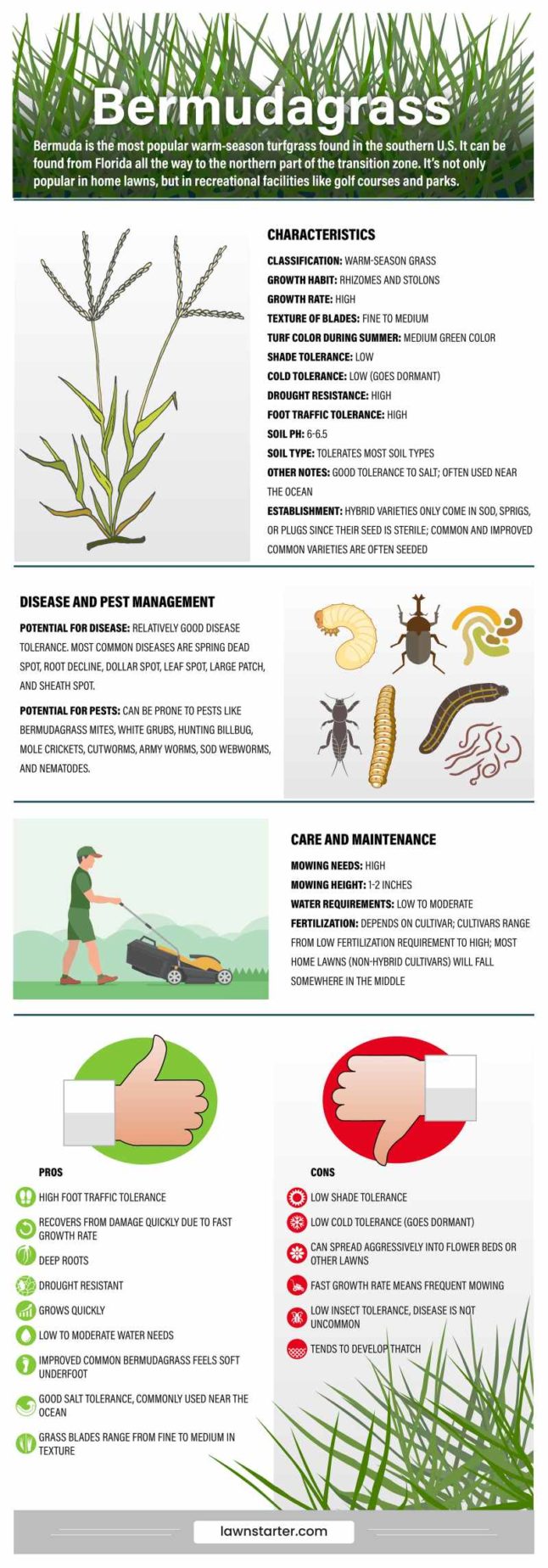
Credit: www.lawnstarter.com
Choosing Compatible Grass Types
Choosing grass types that grow well with Bermuda helps create a healthy lawn. Some grasses mix better because they share similar needs like sunlight, water, and temperature. Picking compatible types makes lawn care easier and keeps the grass strong.
Warm-season Grasses
Bermuda grass is a warm-season grass. It grows best in hot weather and full sun. Other warm-season grasses like Zoysia and St. Augustine also thrive in similar conditions. These grasses handle heat well and have similar water needs. Mixing them with Bermuda creates a uniform lawn that stays green in summer.
Cool-season Grasses
Cool-season grasses grow best in cooler temperatures. Examples include fescue and Kentucky bluegrass. These grasses do not mix well with Bermuda because they prefer different climates. Bermuda may go dormant in winter while cool-season grasses stay green. This difference can make the lawn look patchy and uneven.
Shade Tolerance
Bermuda grass needs full sun and struggles in shade. Grasses with good shade tolerance include St. Augustine and Zoysia. These can fill shady spots where Bermuda thins out. Choosing shade-tolerant grasses helps keep the lawn lush under trees or near buildings. It balances sun and shade areas well.
Top Grass Blends With Bermuda
Bermuda grass is popular for warm climates and durability. It grows fast and handles heat well. Mixing Bermuda with other grasses can improve your lawn’s look and health. The right blend adds color, texture, and strength to your yard.
Here are some top grass blends that work well with Bermuda. Each mix has unique benefits for different lawn needs.
Bermuda And Zoysia Mix
Combining Bermuda with Zoysia offers a lush, dense lawn. Zoysia grows slowly but fills in bare spots nicely. This mix handles heat and drought with ease. It creates a soft feel underfoot and stays green longer in cooler months.
Bermuda And Centipede Blend
Centipede grass pairs well with Bermuda for low-maintenance lawns. Centipede grows slowly and needs less fertilizer. This mix stays green in spring and fall. It suits lawns that want less mowing and fewer chemicals.
Bermuda And Fescue Combination
Fescue adds cool-season resilience to Bermuda’s warm-season strength. This blend keeps lawns green during winter. Fescue grows well in shade, helping shaded areas stay healthy. It needs more water but improves lawn color variety.
Benefits Of Mixed Lawns
Mixed lawns combine different grass types to create a healthier yard. Mixing grasses with Bermuda enhances lawn quality and appearance. The blend brings unique benefits that single grass lawns lack.
Each grass type adds strength and beauty. Together, they form a balanced and resilient lawn. These advantages make mixed lawns a smart choice for many homeowners.
Improved Texture And Color
Mixing grasses changes the lawn’s look and feel. Different blades create a soft, lush texture. The mix of green shades adds visual interest. This variety makes the lawn more attractive year-round.
Enhanced Durability
Different grasses resist stress in unique ways. Combining them increases the lawn’s toughness. Mixed lawns better handle foot traffic and weather. They recover faster from damage and wear.
Seasonal Adaptability
Some grasses grow better in warm seasons. Others thrive in cooler months. Mixing Bermuda with cool-season grasses keeps the lawn green longer. This blend adjusts to temperature changes with ease.
Planting And Maintenance Tips
Planting and maintaining a grass mix with Bermuda requires careful steps. The right methods keep your lawn healthy and green. Follow simple tips on seeding, watering, and fertilizing for best results.
Seeding And Sodding Methods
Choose high-quality seeds that blend well with Bermuda grass. Plant seeds in early spring or late summer for good growth. Spread seeds evenly and cover lightly with soil. Water gently after seeding to keep soil moist.
Sodding offers quick lawn coverage. Lay sod pieces tightly without gaps. Press sod firmly to soil for strong contact. Water sod daily for two weeks to help roots settle.
Watering Strategies
Water deeply but less often to encourage strong roots. Early morning watering reduces evaporation and disease risk. Aim for about one inch of water per week. Adjust watering based on weather and soil type.
Fertilization Plans
Use a balanced fertilizer designed for Bermuda and its mix. Apply fertilizer every 6 to 8 weeks during the growing season. Avoid over-fertilizing to prevent weak grass and pests. Follow package instructions carefully for best results.
Common Challenges And Solutions
Growing Bermuda grass with other grasses can create a healthy lawn. Yet, some common problems may arise. Knowing these issues and how to fix them helps keep your lawn green and strong. Problems like pests, weeds, and thatch can hurt your grass. Each needs special care and attention. Here are simple ways to handle these common challenges.
Pest And Disease Management
Bermuda grass and its companions can attract pests like armyworms and mites. These bugs eat grass leaves and roots, causing brown spots. Watch your lawn often for signs of pests. Use natural predators or insecticides to control them.
Diseases like leaf spot or dollar spot also affect Bermuda mixes. Good airflow and proper watering reduce disease risk. Remove infected grass parts quickly to stop spread. Choose disease-resistant grass varieties for better protection.
Weed Control
Weeds compete with Bermuda grass for water and nutrients. Common weeds include crabgrass and dandelions. Pull weeds by hand or use herbicides safe for Bermuda mixes. Mow regularly to stop weeds from flowering and seeding.
Healthy grass grows thick and crowds out weeds naturally. Fertilize your lawn properly to keep grass strong. Avoid overwatering, which helps weeds grow faster.
Dealing With Thatch
Thatch is a layer of dead grass and roots that builds up on soil. Too much thatch stops water and nutrients from reaching roots. It also creates a good home for pests and disease.
Remove thatch with a rake or dethatcher machine in spring or fall. Aerate the soil to improve air and water flow. Keep mowing and watering balanced to prevent thatch from returning.

Credit: www.thelawnforum.com
Frequently Asked Questions
What Grass Types Grow Well With Bermuda Grass?
St. Augustine, Zoysia, and Centipede grasses mix well with Bermuda. They share similar sunlight and water needs, creating a uniform lawn.
Can Kentucky Bluegrass Blend With Bermuda Grass?
Kentucky Bluegrass can be mixed with Bermuda in cooler climates. It adds lushness but may struggle in intense heat and drought.
Why Mix Bermuda With Fescue Grass?
Fescue complements Bermuda by providing shade tolerance and cooler-season color. This mix works well in transitional climates with varying seasons.
Is Zoysia Grass Compatible With Bermuda Grass?
Yes, Zoysia blends well with Bermuda. Both tolerate heat and drought, making a durable, attractive lawn with varied texture.
Conclusion
Choosing the right grass to mix with Bermuda can improve your lawn’s look. Ryegrass and fescue blend well and add color and texture. These mixes help the lawn stay green in cooler months. They also make the grass thicker and stronger.
Remember to water and mow regularly for best results. A good grass mix keeps your yard healthy all year. Try different blends to see what works best for your soil and climate. Healthy grass means a happy and beautiful lawn.
