
Are you ready to transform your lawn into a lush, green paradise? Knowing exactly when to sow Bermuda grass can make all the difference between a vibrant yard and a patchy mess.
Timing is everything, and if you get it right, you’ll save time, money, and a lot of frustration. You’ll discover the best seasons, soil conditions, and tips to ensure your Bermuda grass thrives. Keep reading—you’re just one step away from the perfect lawn!
Ideal Climate For Bermuda Grass
Bermuda grass thrives best in warm climates. It grows well where temperatures stay high most of the year. Understanding the ideal climate helps you know the best time to sow it. This grass prefers sunny areas with little shade. It also needs enough warmth to spread quickly and form a dense lawn.
Temperature Requirements
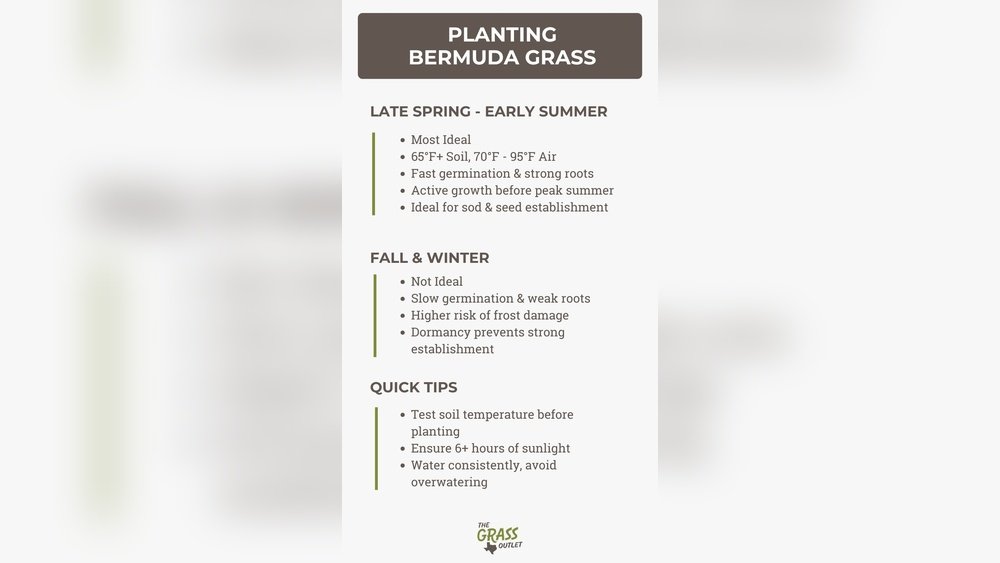
Bermuda grass grows best when daytime temperatures are between 75°F and 95°F. Night temperatures should not drop below 60°F. It slows down if temperatures fall under 50°F. It cannot survive freezing weather for long. Warm soil is also important. Soil temperature should be at least 65°F for good seed germination.
Seasonal Considerations
Spring and early summer offer the best time to plant Bermuda grass. Soil and air temperatures rise naturally during these months. This helps the seeds sprout faster. Avoid sowing in fall or winter when temperatures drop. Cold weather can stop growth and kill young grass plants. Summer heat helps Bermuda grass grow thick and green.
Credit: theturfgrassgroup.com
Best Time To Sow Bermuda Grass
The best time to sow Bermuda grass depends on temperature and sunlight. This grass grows well in warm weather. Planting at the right time helps the grass grow strong and healthy. Early sowing gives the grass enough time to establish before hot summer months.
Spring Planting
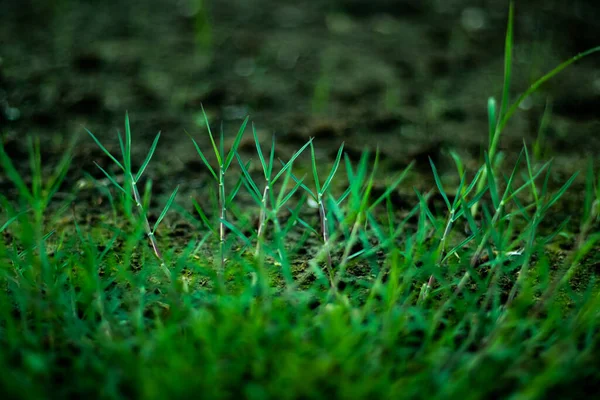
Spring is a great time to plant Bermuda grass. Soil warms up, helping seeds to sprout quickly. Daytime temperatures between 65°F and 75°F are ideal. Planting in spring allows the grass to grow before summer heat arrives. The grass can develop deep roots and thick blades.
Summer Planting
Summer also works for sowing Bermuda grass. Warm temperatures boost fast growth. Keep soil moist, as hot weather can dry seeds. Watering often helps seedlings survive the heat. Summer planting needs more care but leads to strong grass by fall.
Avoiding Fall And Winter
Fall and winter are not good times to sow Bermuda grass. Cooler temperatures slow seed germination and root growth. Grass may die before establishing well. Soil is often too cold for seeds to grow. Avoid these seasons to prevent poor grass growth.
Soil Preparation Tips
Preparing your soil properly is key to growing healthy Bermuda grass. Good soil helps seeds grow strong roots and spread well. Follow these simple soil preparation tips for best results.
Soil Testing
Start by testing your soil. Soil tests show nutrient levels and pH balance. This helps you understand what your soil needs. You can buy a test kit or send a sample to a lab. Testing saves time and money on wrong fertilizers.
Amending The Soil
After testing, add needed nutrients to your soil. Use lime to raise pH or sulfur to lower it. Mix in compost or organic matter to improve soil texture. This makes the soil loose and rich, perfect for Bermuda grass roots.
Tilling And Leveling
Next, till the soil to break up clumps and mix amendments. Tilling creates a soft bed for seeds to take root. After tilling, level the soil surface. A smooth, even surface helps water spread evenly and prevents seed washout.
Seed Selection And Treatment
Choosing the right seeds and preparing them properly helps Bermuda grass grow strong. Good seed selection and treatment improve germination and growth. These steps ensure a healthy lawn that lasts.
Use quality seeds and treat them before planting. This makes the grass more likely to take root and spread well.
Choosing Quality Seeds
Select seeds from a trusted source. High-quality seeds have better germination rates. They resist disease and produce lush grass. Look for pure Bermuda grass seeds without fillers or weeds. Check the seed package for the date to ensure freshness. Fresh seeds grow faster and stronger.
Pre-sowing Seed Treatment
Treat seeds before planting to boost growth. Soaking seeds in water for 12 to 24 hours helps soften the seed coat. This speeds up germination. Avoid soaking too long to prevent seed damage. Some gardeners use a mild fungicide to prevent diseases. Always follow instructions carefully. Proper treatment gives seeds a healthy start.
Sowing Techniques
Sowing Bermuda grass requires careful choice of techniques. Proper methods help seeds grow strong and healthy. The best technique depends on your soil, budget, and area size. Here are three common ways to sow Bermuda grass effectively.
Broadcast Seeding
Broadcast seeding spreads seeds evenly by hand or machine. It works well for small to medium lawns. You scatter seeds across the soil surface. Lightly rake the area to cover seeds with soil. Water gently to keep soil moist. This method is simple and low-cost. It may need extra care to avoid seed loss.
Drill Seeding
Drill seeding plants seeds deeper and evenly in rows. A seed drill machine makes small holes and drops seeds inside. This protects seeds from birds and wind. It also improves seed-to-soil contact. Drill seeding suits large areas and new lawns. It helps seeds sprout faster and stronger. The equipment cost is higher than broadcast seeding.
Hydroseeding
Hydroseeding mixes seeds with water, fertilizer, and mulch. This slurry sprays over the soil using special equipment. It sticks well to slopes and uneven ground. Hydroseeding covers large areas quickly. It keeps seeds moist and protected. This method speeds up germination and growth. Hydroseeding costs more but saves time and labor.
Watering And Maintenance After Sowing
Watering and maintenance after sowing Bermuda grass are crucial steps. Proper care helps seeds sprout and grow strong roots. It prevents common problems and ensures a lush lawn. Follow a clear plan for watering, fertilizing, and weed control. This helps your grass develop healthy and thick coverage.
Initial Watering Schedule
Water the soil lightly right after sowing. Keep the top layer moist but not soaked. Water two to three times daily for the first two weeks. Reduce frequency as seedlings appear. After three weeks, water deeply once or twice a week. This encourages deep root growth and drought resistance.
Fertilization Tips
Start fertilizing about four weeks after sowing. Use a balanced fertilizer with nitrogen, phosphorus, and potassium. Apply it in small amounts to avoid burning young grass. Follow the instructions on the fertilizer package. Repeat fertilization every six to eight weeks during the growing season.
Weed Control
Weeds compete with Bermuda grass for nutrients and water. Remove weeds by hand during early growth stages. Avoid using strong herbicides until grass is well established. Use mulch or ground cover to prevent weed seeds from settling. Regular mowing helps keep weeds under control as grass grows.
Common Challenges And Solutions
Sowing Bermuda grass can bring great results if done right. Still, some challenges may arise. These common problems can affect the growth and health of your lawn. Knowing how to handle them helps keep your grass strong and green.
Dealing With Pests
Pests like grubs and armyworms can damage Bermuda grass quickly. They eat the roots and leaves, causing brown spots. To control pests, use natural predators or safe insecticides. Regular lawn checks catch pests early. Keeping the grass healthy also makes it less attractive to bugs.
Handling Poor Germination
Poor germination means seeds do not sprout well. This can happen due to bad seed quality or dry soil. Water the soil gently and keep it moist until seeds sprout. Choose fresh seeds from a trusted source. Loosen the soil before sowing to help roots grow easily.
Managing Soil Erosion
Soil erosion washes away the topsoil needed for Bermuda grass. This often happens on slopes or after heavy rain. Plant grass on small sections at a time to reduce runoff. Use mulch or straw to cover bare soil. Building small barriers can slow water flow and keep soil in place.
Credit: www.sare.org

Credit: thegrassoutlet.com
Frequently Asked Questions
When Is The Best Time To Sow Bermuda Grass?
The best time to sow Bermuda grass is in late spring to early summer. Soil temperatures should be above 65°F for optimal germination. This timing ensures warm weather, promoting quick growth and establishment.
How Long Does Bermuda Grass Take To Germinate?
Bermuda grass typically takes 7 to 21 days to germinate. Warmer soil speeds up the process. Consistent moisture and sunlight are essential during this period for successful seed sprouting.
Can Bermuda Grass Be Sown In Fall?
Sowing Bermuda grass in fall is not ideal. Cooler soil temperatures slow germination and growth. It’s better to plant in spring or early summer for strong establishment before winter.
What Soil Conditions Favor Bermuda Grass Sowing?
Bermuda grass prefers well-drained, sandy to loamy soil with a pH of 5. 8 to 7. 0. Proper soil preparation, including aeration and nutrient-rich amendments, improves seed-to-soil contact and growth.
Conclusion
Sowing Bermuda grass at the right time helps it grow strong and green. Warm soil and steady temperatures give seeds the best start. Planting too early or late can slow growth or cause patchy spots. Water regularly and keep the soil moist after sowing.
Watch your lawn fill in and thrive over weeks. Choosing the best season makes all the difference for a healthy lawn. Start smart, and enjoy a lush Bermuda grass yard all summer long.
