


Are you ready to transform your lawn into a lush, green paradise? Knowing exactly when to plant Bermuda grass in Texas is the key to achieving a vibrant yard that thrives all season long.
Plant it too early or too late, and you risk patchy growth or wasted effort. But get the timing right, and your grass will grow strong, resist weeds, and stay healthy through the heat. Keep reading to discover the perfect planting window and simple tips to make your Bermuda grass flourish like never before.
Your dream lawn is closer than you think!
Credit: www.rynolawncare.com
Ideal Planting Time
Knowing the ideal planting time for Bermuda grass in Texas helps you get the best results. Planting at the right time ensures strong growth and a green lawn. Timing depends on temperature, season, and soil conditions. Pay attention to these factors to plant Bermuda grass successfully.
Optimal Temperature Range
Bermuda grass grows best when temperatures are between 65°F and 75°F. This range helps seeds sprout quickly and roots grow strong. Planting too early or too late can slow growth or cause the grass to die. Wait until daily temperatures stay in this range before planting.
Seasonal Considerations
Spring is the best season to plant Bermuda grass in Texas. The weather warms up, but it is not too hot yet. Avoid planting in fall or winter because cold can kill new grass. Summer heat may stress young plants. Spring provides the right balance for growth.
Soil Warmth Indicators
Soil temperature is as important as air temperature. Bermuda grass seeds need soil at least 60°F to grow well. Use a soil thermometer to check warmth. If the soil is too cold, wait a few weeks. Warm soil helps seeds germinate and roots take hold.
Preparing The Soil
Preparing the soil is the first step to grow healthy Bermuda grass in Texas. Good soil helps grass roots grow deep and strong. It also keeps the grass green and thick. Taking time to prepare the soil makes a big difference in your lawn’s success.
Soil Testing Tips
Test the soil before planting Bermuda grass. A soil test shows the pH level and nutrient content. You can buy a kit or send samples to a lab. The ideal pH for Bermuda grass is between 5.8 and 7.0. Testing helps you know what your soil needs to support growth.
Amendments For Growth
Based on the soil test, add necessary amendments. Lime raises soil pH if it is too acidic. Sulfur lowers pH if the soil is too alkaline. Add fertilizers rich in nitrogen, phosphorus, and potassium. Organic matter like compost improves soil texture and drainage. These changes help Bermuda grass grow strong and healthy.
Proper Soil Preparation Steps
Clear the area of debris, rocks, and weeds. Loosen the soil with a rake or tiller to a depth of 4 to 6 inches. Spread the amendments evenly over the soil. Mix them well into the topsoil for best results. Level the surface to avoid water pooling. Water the soil lightly to settle it before planting seeds or sod.
Choosing The Right Seed
Choosing the right Bermuda grass seed is key to a healthy lawn in Texas. The seed type affects how well the grass grows in heat and drought. It also impacts the lawn’s texture and color. Picking the best seed helps the grass stay green longer and resist weeds.
Popular Bermuda Grass Varieties
Several Bermuda grass types suit Texas climates. Common varieties include Common Bermuda, Tifway, and Celebration. Common Bermuda is affordable and grows fast but may need more care. Tifway is dense and good for sports fields. Celebration has a dark green color and stays soft underfoot.
Seed Quality Factors
High-quality seeds have a higher germination rate. Check for seeds free from weeds and dirt. Seeds should be fresh and stored properly. Old seeds grow slowly or not at all. Good seeds produce strong, healthy grass plants.
Where To Buy Seeds
Buy seeds from local garden centers or nurseries. Local sellers know which seeds work best in Texas. Online stores offer many options but choose trusted brands. Read reviews before buying to ensure good quality. Always buy certified seeds for best results.
Planting Techniques
Planting Bermuda grass in Texas needs careful methods. The right techniques help the grass grow strong and green. Choosing how to plant depends on your yard size and budget. Proper care after planting boosts success.
Here are key planting techniques for Bermuda grass.
Seeding Methods
Seeding is a popular way to start Bermuda grass. Spread seeds evenly over prepared soil. Lightly rake the seeds to cover them. Use a seed spreader for large areas. This method is cheaper but takes time to grow. Seeds need warm soil to sprout well.
Sodding Vs Seeding
Sodding gives instant green grass. It uses pre-grown grass rolls placed on soil. Sodding costs more but shows quick results. Seeding is slower but cheaper. Sodding works best for busy areas or slopes. Seeding suits large spaces with time to grow.
Watering After Planting
Watering is crucial after planting Bermuda grass. Keep the soil moist but not soaked. Water lightly several times a day at first. Gradually reduce watering as grass grows. Deep watering helps roots grow strong. Avoid overwatering to prevent disease.
Maintenance Tips
Maintaining Bermuda grass in Texas requires steady care to keep it green and healthy. Proper watering, fertilizing, and mowing help the grass grow strong. These simple steps reduce weeds and dry patches. Follow these tips to enjoy a lush lawn all season.
Watering Schedule
Bermuda grass needs about 1 inch of water per week. Water deeply once or twice weekly. Early morning is best to avoid evaporation. Avoid overwatering, which causes disease and weak roots. Let the soil dry slightly between waterings.
Fertilizing Guidelines
Use a nitrogen-rich fertilizer for Bermuda grass. Apply fertilizer every 6 to 8 weeks during growing season. Follow package instructions for the right amount. Stop fertilizing in late fall to prepare grass for winter. Avoid too much fertilizer to prevent burning.
Mowing Practices
Mow Bermuda grass regularly to keep it healthy. Set mower height between 1 and 2 inches. Never cut more than one-third of the grass height at once. Sharpen mower blades to avoid tearing leaves. Grass clippings can stay on the lawn as natural mulch.
Credit: www.pennington.com
Common Challenges
Bermuda grass thrives in Texas but faces common challenges that affect growth. These issues can reduce the health and appearance of your lawn. Understanding these problems helps maintain a strong and green lawn.
Pest And Disease Control
Bermuda grass can attract pests like armyworms and grubs. These insects eat the grass blades and roots, causing brown patches. Fungal diseases also appear in warm, wet conditions. Regular lawn checks help spot problems early. Treat infestations with appropriate insecticides or natural methods quickly.
Weed Management
Weeds compete with Bermuda grass for nutrients and water. Crabgrass, nutsedge, and clover are common invaders. Pull weeds by hand or use selective herbicides to protect the grass. Keep the lawn thick and healthy to naturally block weeds. Mowing at the right height reduces weed seeds from growing.
Dealing With Drought
Texas summers can be very dry, stressing Bermuda grass. Drought causes the grass to turn brown and thin out. Water deeply but less often to encourage strong roots. Early morning watering reduces evaporation. Mulching and aeration help the soil hold moisture longer.
Regional Variations
Texas has many climates. This means planting Bermuda grass varies by region. Knowing these differences helps your lawn grow well. Each area needs special care and timing. This guide covers North, Central, and South Texas tips.
North Texas Planting Tips
North Texas has cooler winters and hot summers. Plant Bermuda grass after the last frost date. Usually, this is late March to early April. Soil temperature should be above 65°F for best growth. Water the grass regularly during dry spells. Avoid planting too early, or the grass may die.
Central Texas Considerations
Central Texas has mild winters and warm springs. Plant Bermuda grass from mid-March to mid-April. The soil warms faster here than in the north. This allows an earlier start. Use quality seed and keep soil moist. This helps grass roots develop strong and deep.
South Texas Adjustments
South Texas is warmer year-round. Plant Bermuda grass as early as February. The soil stays warm, so grass grows quickly. Watch for dry weather and water often. This region may need less fertilizer. Monitor grass health and adjust care to keep it green.
Credit: thegrassoutlet.com
Frequently Asked Questions
When Is The Best Time To Plant Bermuda Grass In Texas?
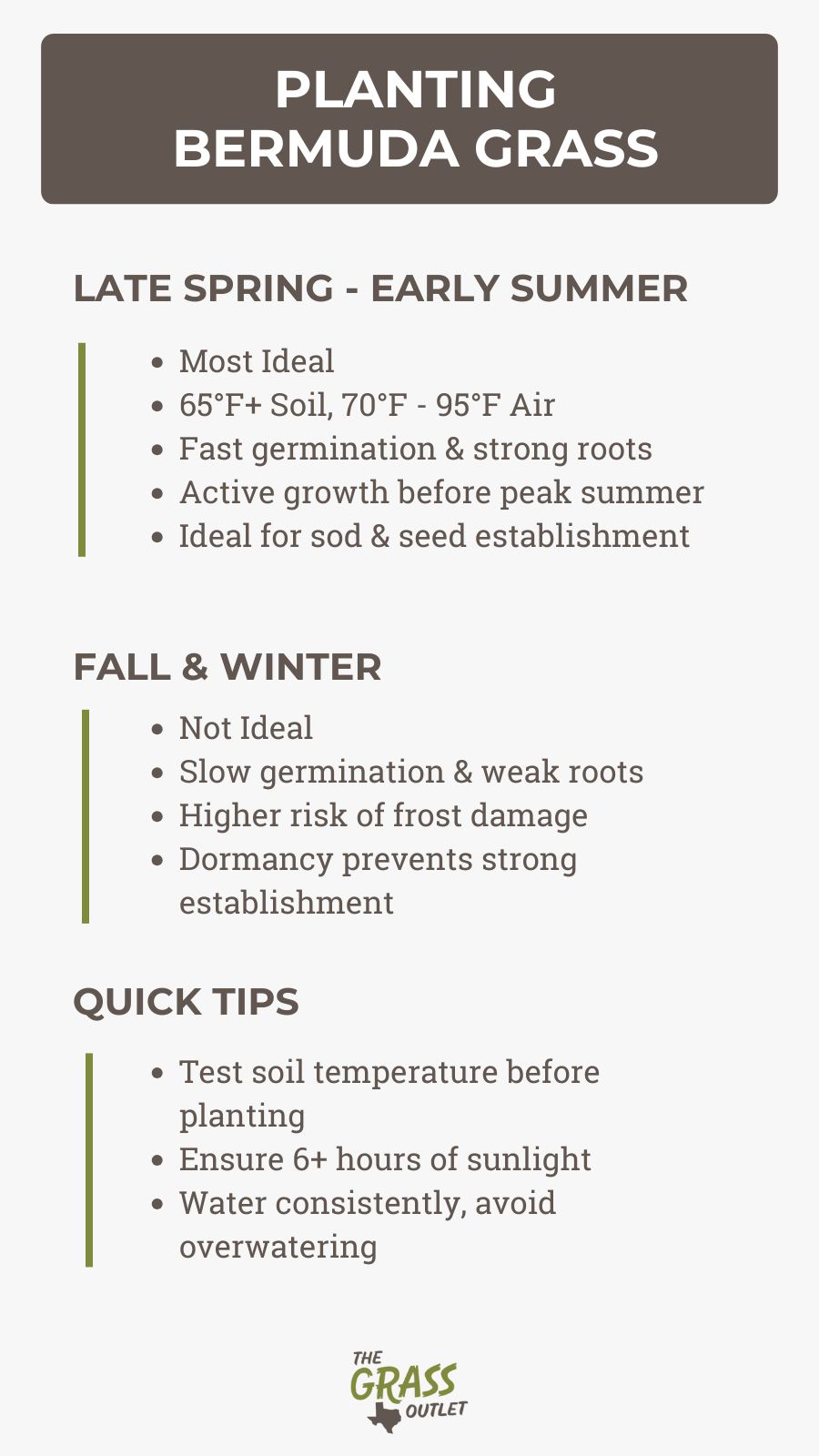
The best time to plant Bermuda grass in Texas is late spring to early summer. Soil temperatures should reach at least 65°F. This timing ensures optimal germination and growth during warm months.
How Long Does Bermuda Grass Take To Grow In Texas?
Bermuda grass typically takes 7 to 14 days to germinate in Texas. Full lawn coverage can occur within 6 to 8 weeks under ideal conditions.
Can I Plant Bermuda Grass In Fall In Texas?
Planting Bermuda grass in fall is not recommended in Texas. Cooler temperatures slow growth, risking poor establishment before winter dormancy.
What Soil Conditions Does Bermuda Grass Prefer In Texas?
Bermuda grass prefers well-drained, sandy or loamy soil with a pH of 5. 8 to 7. 0. Proper soil boosts root development and lawn health.
Conclusion
Planting Bermuda grass at the right time helps it grow strong. Start when the soil warms, usually in late spring. This gives grass a good chance to root deeply. Avoid planting too early or late to prevent weak growth. Water regularly and watch for weeds.
Healthy Bermuda grass makes your lawn look great all summer. Follow these simple steps for a lush, green yard. Enjoy the beauty and comfort of your Texas lawn. Patience pays off with a thick, green Bermuda lawn.
