

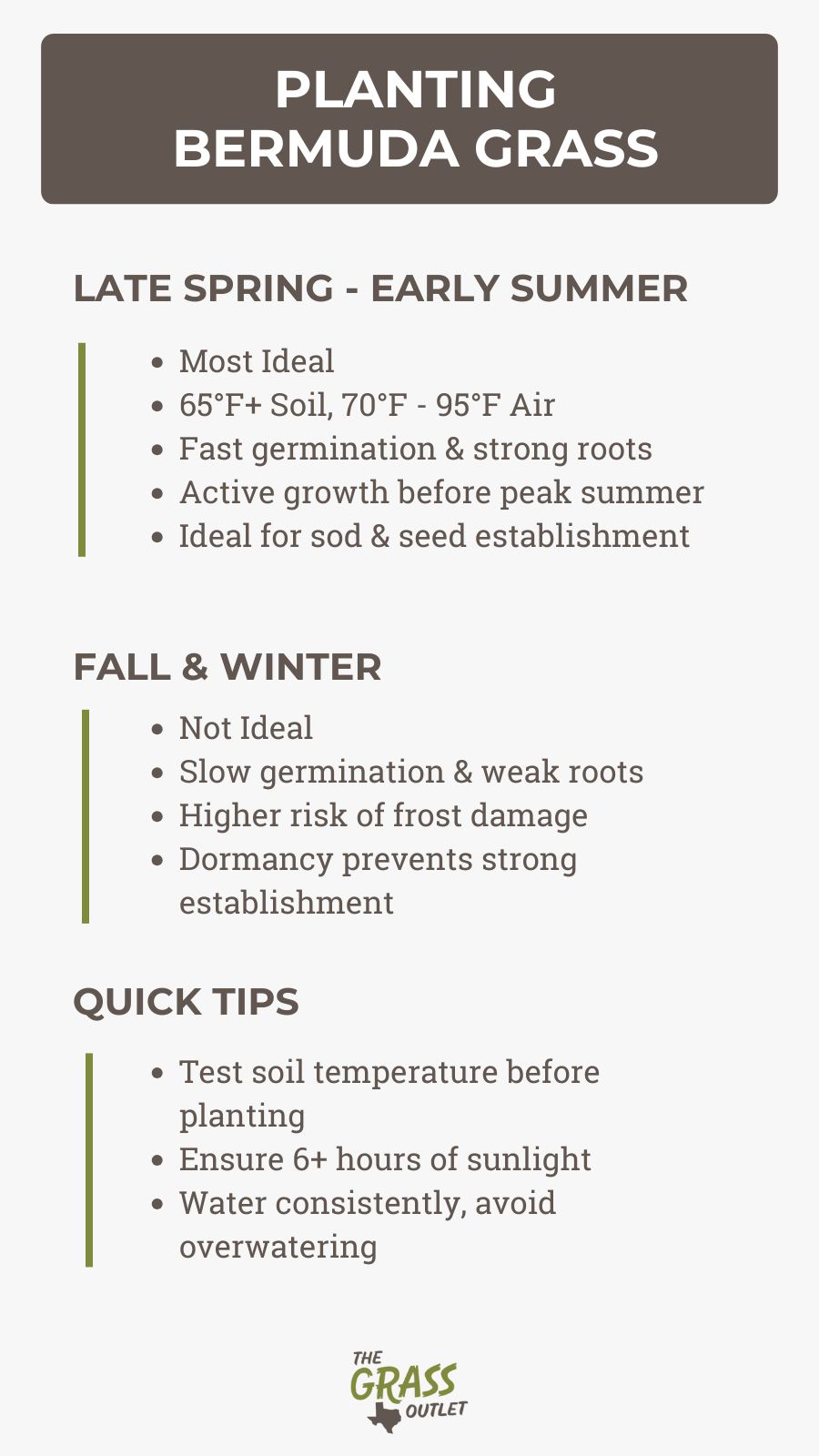
The best time to plant Bermuda grass seed is during warm soil conditions, typically in late spring or early summer. This timing ensures optimal temperatures for seed germination and growth, helping you establish a thick, healthy lawn that can resist weeds and thrive throughout the growing season.
Are you looking to grow a lush, green lawn that stands out in your neighborhood? Knowing exactly when to plant Bermuda grass seed can make all the difference between a patchy yard and a thick, healthy turf.
Timing is everything—plant too early or too late, and you might struggle with poor growth or weeds taking over. You’ll discover the best time to plant Bermuda grass seed so your lawn thrives and stays vibrant all season long. Keep reading to learn the secrets that will help you get the perfect lawn you’ve been dreaming about.
Choosing The Right Season
Choosing the right season to plant Bermuda grass seed is very important. The season affects how well the grass grows and how quickly it spreads. Planting at the right time helps the grass get strong roots and healthy blades. It also reduces the risk of problems like disease or poor growth. Understanding the best season means knowing about temperature, soil, and avoiding weather problems.
Optimal Temperature Range
Bermuda grass seed grows best in warm temperatures. The soil should be between 65°F and 75°F for good seed germination. Air temperatures around 80°F to 95°F help the grass grow fast. Planting when it is too cold slows growth. Too hot can dry out the seed before it sprouts. Warm spring and early summer months work well.
Soil Conditions And Moisture
Soil needs to be loose and well-drained. This helps the seed get enough air and water. Keep the soil moist but not soaked. Dry soil stops seeds from sprouting. Wet soil can cause seeds to rot. Check soil often and water lightly to keep it damp. Preparing soil before planting helps the seed settle and grow.
Avoiding Frost And Heat Stress
Frost can kill young Bermuda grass seedlings. Planting after the last frost date avoids this risk. Heat stress happens when temperatures are very high. This can dry out seeds and damage young grass. Planting too early or too late causes stress to the grass. Choose a season with stable, warm weather to protect the seed and young plants.
Spring Planting Benefits
Planting Bermuda grass seed in spring has many benefits. The warm soil helps seeds sprout faster. Days get longer, giving grass more sunlight. This fast start builds strong roots early on.
The weather in spring is often just right. It is not too hot or too cold for young grass. This balance helps the grass grow healthy and thick. Early growth sets the stage for a lush lawn all summer.
Early Growth Advantages
Spring warmth speeds up Bermuda grass germination. Seeds sprout quickly and grow strong shoots. Early growth means grass fills bare spots fast. This helps the lawn look green sooner. Healthy young grass can better handle heat later.
Weed Competition
Spring planting reduces weed problems. Bermuda grass grows fast and covers the ground. This leaves little space for weeds to grow. Strong grass chokes out unwanted plants naturally. Less weed competition means less need for chemicals.
Watering Requirements
Spring weather lowers watering needs for new grass. Cooler temperatures reduce evaporation from soil. Young Bermuda grass gets enough moisture with less water. This saves time and water bills. Regular light watering keeps seeds moist and healthy.
Fall Planting Benefits
Planting Bermuda grass seed in the fall offers many benefits for your lawn. The season provides ideal conditions for seed growth and root development. You can expect a healthier lawn by planting during cooler months. Here are some key advantages of fall planting.
Cooler Temperatures
Fall brings cooler air and soil temperatures. These conditions reduce heat stress on new grass seedlings. Seeds can germinate more steadily without drying out. Cooler weather helps young Bermuda grass establish strong roots. This leads to better growth in the spring.
Reduced Pest Activity
Many lawn pests are less active in fall. This means fewer insects and diseases attack new grass. Young seedlings have a higher chance of survival. Less pest damage means less need for chemicals or treatments. Your Bermuda grass can grow with less stress.
Preparation For Winter
Fall planting allows Bermuda grass to build root strength before winter. Strong roots store nutrients and water for cold months. The grass becomes more resilient against winter damage. When spring arrives, your lawn will green up faster and thicker. Preparing in fall helps your lawn thrive year-round.
Credit: www.sare.org
Preparing Your Lawn
Preparing your lawn is the first step to planting Bermuda grass seed successfully. It sets the stage for healthy growth and thick grass. Proper preparation helps seeds take root and grow strong quickly.
Soil Testing And Amendment
Test your soil to know its pH and nutrient levels. Bermuda grass prefers a pH between 5.8 and 7.0. Use a home testing kit or send samples to a lab. Add lime to raise pH or sulfur to lower it. Fertilize based on soil test results to provide nutrients.
Clearing Debris And Weeds
Remove rocks, sticks, and old grass from the lawn area. Clear all weeds to reduce competition for your new seeds. Use a rake or hoe to clear the surface. A clean, smooth area helps seeds contact soil better. This improves germination and root growth.
Proper Seed Selection
Choose Bermuda grass seed suited for your climate and soil type. Use fresh seed with high germination rates. Avoid seeds mixed with other grass types. Select certified seeds to ensure quality and purity. Good seed choice leads to a healthy, green lawn.
Seeding Techniques
Planting Bermuda grass seed requires careful seeding techniques for the best growth. Proper methods help the seeds sprout evenly and grow strong. Choosing the right technique affects how well the grass covers your lawn.
Broadcasting Vs. Drilling
Broadcasting spreads seeds by hand or machine over the soil. This method covers a wide area quickly but may cause uneven seed distribution. Drilling plants seeds directly into the soil in rows. It places seeds at a consistent depth for better germination. Drilling usually leads to stronger, more uniform grass growth.
Seed Rate And Depth
Use the right seed rate to avoid too many or too few plants. For Bermuda grass, 1 to 2 pounds of seed per 1,000 square feet works well. Plant seeds about 1/4 inch deep. Shallow planting helps seeds get enough light and moisture. Too deep can stop seeds from sprouting.
Watering Schedule After Planting
Water seeds lightly after planting to keep soil moist. Do this several times a day for the first two weeks. Avoid flooding, which can wash seeds away. After grass begins to grow, water less often but deeper. This encourages roots to grow strong and deep.

Credit: www.wikihow.com
Common Planting Mistakes
Planting Bermuda grass seed can be simple. But many make common mistakes. These errors can stop your grass from growing well. Avoid these to have a healthy green lawn.
Planting Too Early Or Late
Planting Bermuda grass seed too early means cold soil. Cold soil stops seeds from sprouting. Planting too late means less time to grow. Seeds may not grow strong before cold weather. The best time is late spring to early summer.
Improper Soil Preparation
Soil must be loose and clean before planting. Hard soil stops roots from growing deep. Remove rocks, weeds, and debris first. Add compost or sand to improve soil texture. Good soil helps seeds grow fast and healthy.
Over Or Under Watering
Watering too much can drown seeds and cause rot. Watering too little makes seeds dry and die. Water lightly but often until seeds sprout. After sprouting, water deeply but less often. Keep soil moist but not soggy for best results.
Maintaining A Healthy Lawn
Maintaining a healthy lawn with Bermuda grass seed requires ongoing care. Proper steps keep the grass strong and green. A good lawn needs attention to soil, water, and pests. Follow simple practices for best results.
Fertilization Tips
Fertilize Bermuda grass regularly to support growth. Use a balanced fertilizer with nitrogen, phosphorus, and potassium. Apply in spring and summer for best uptake. Avoid over-fertilizing to prevent burning the grass. Water the lawn after fertilizing to help nutrients soak in.
Mowing Practices
Cut Bermuda grass at about 1 to 2 inches tall. Keep mower blades sharp for clean cuts. Mow frequently, but never remove more than one-third of the grass height. Leave grass clippings on the lawn as natural fertilizer. This practice helps retain moisture and nutrients.
Pest And Disease Control
Watch for pests like grubs and armyworms that damage grass roots. Treat infestations early with appropriate insecticides. Check for diseases such as leaf spot or dollar spot. Use fungicides if needed and improve lawn drainage. Healthy grass resists pests and diseases better.
Credit: thegrassoutlet.com
Frequently Asked Questions
When Is The Best Time To Plant Bermuda Grass Seed?
The best time to plant Bermuda grass seed is late spring to early summer. Soil temperatures should be at least 65°F for optimal germination. Warm weather promotes healthy growth and faster establishment of the grass.
How Long Does Bermuda Grass Seed Take To Germinate?
Bermuda grass seed typically takes 7 to 21 days to germinate. Warm soil and consistent moisture speed up this process. Proper care during this period ensures a strong, healthy lawn.
Can Bermuda Grass Seed Be Planted In Fall?
Planting Bermuda grass seed in fall is not ideal. Cooler temperatures slow germination and growth. For best results, plant in late spring or early summer when soil is warm.
How Much Bermuda Grass Seed Do I Need Per Square Foot?
Use about 1 to 2 pounds of Bermuda grass seed per 1,000 square feet. This amount ensures even coverage and healthy lawn growth. Adjust quantity based on soil condition and seed quality.
Conclusion
Plant Bermuda grass seed during warm months for best growth. The soil should be well-prepared and moist. Water the area regularly but avoid flooding. Sunlight helps the grass grow thick and green. Patience is key—growth takes time but is worth it.
Follow these steps to enjoy a healthy lawn. Your yard will soon look fresh and vibrant. Start early and watch your Bermuda grass thrive.
