


Maintaining a Bermuda grass lawn requires choosing the right variety for your climate, preparing soil properly, and following consistent watering and mowing routines. With attention to soil health, timely fertilization, and pest control, you can keep your lawn vibrant and resilient through the growing season.
Are you struggling to keep your Bermuda grass lawn looking lush and green? You’re not alone.
Bermuda grass is tough and beautiful, but it needs the right care to stay healthy and vibrant. Imagine stepping outside onto a soft, carpet-like lawn that’s the envy of your neighborhood. That’s exactly what you can achieve with a few simple, proven techniques.
In this guide, you’ll discover easy steps to maintain your Bermuda grass lawn, save time, and get the best results. Ready to transform your yard? Let’s dive in!
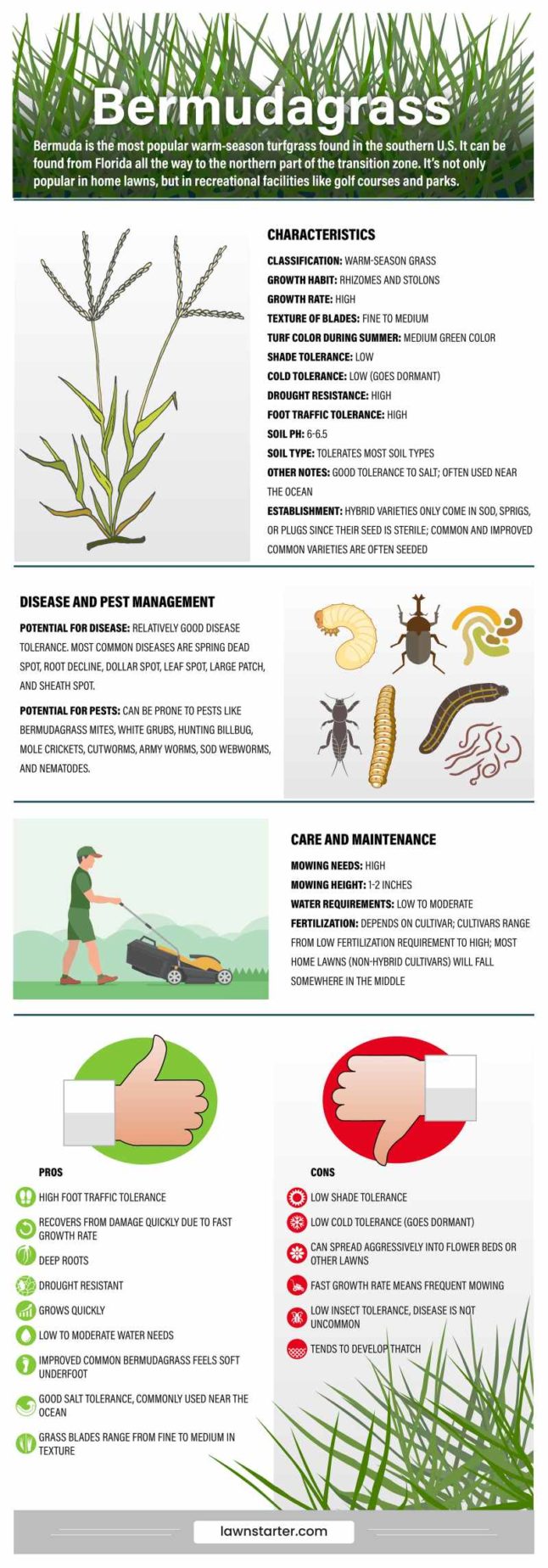
Credit: www.lawnstarter.com
Choosing The Right Bermuda Grass
Choosing the right Bermuda grass is key to a healthy lawn. The right type fits your soil, climate, and lawn use. This choice saves time and effort. It also helps your lawn grow thick and green. Understanding the common varieties and climate fit guides you to the best option.
Common Varieties
Bermuda grass comes in many types. Each has unique features. Common varieties include Common Bermuda, Hybrid Bermuda, and Tifway. Common Bermuda is cheap and tough. It works well in large areas but grows coarse. Hybrid Bermuda is softer and denser. It suits lawns and sports fields. Tifway is a popular hybrid. It handles heavy use and recovers fast. Knowing these helps pick grass that fits your lawn needs.
Climate Compatibility
Bermuda grass grows best in warm climates. It loves sun and heat. It struggles in cold or shaded areas. Some varieties handle drought better than others. Common Bermuda tolerates heat and dry soil well. Hybrid types may need more water but resist wear better. Choose a variety that matches your local weather. This ensures your lawn stays green and healthy longer.
Soil Preparation Tips
Proper soil preparation is the first step to a healthy Bermuda grass lawn. Good soil helps grass roots grow strong and absorb water and nutrients well. Preparing the soil carefully creates the perfect environment for Bermuda grass to thrive.
Soil Testing
Soil testing shows what your soil needs. It tells you the pH level and nutrient content. This information guides you on how to improve the soil. You can buy a soil test kit or send a sample to a local extension office. Test the soil before planting or fertilizing. This saves money and prevents damage to the grass.
Amending Soil For Best Growth
Amend the soil based on test results. Add lime to raise low pH or sulfur to lower high pH. Mix in organic matter like compost to improve soil texture. Good soil drains well but holds moisture too. Avoid heavy clay or sandy soil problems by adding the right amendments. This helps Bermuda grass roots spread evenly and grow deep.
Planting And Seeding Methods
Planting and seeding methods are key to starting a healthy Bermuda grass lawn. The right method helps the grass grow strong and green. Choosing the best way depends on your lawn size, budget, and time. Understanding these methods will guide you to a lush lawn.
Sodding Vs. Seeding
Sodding means laying down pieces of grass and soil. It gives instant green color and reduces weed growth. Sod is easy to install but costs more than seeds. It needs watering and care to root well.
Seeding spreads grass seeds over the soil. It is less costly but takes time to grow. Seeds need good soil contact, water, and warmth. Seeding may allow weeds to grow until grass fills in.
Best Time To Plant
Plant Bermuda grass in late spring or early summer. Soil temperatures should be above 65°F for best growth. Warm weather helps seeds and sod root quickly. Avoid planting during cold or dry periods.
Planting at the right time gives grass the best chance to thrive. It helps the lawn resist pests and drought later.

Credit: www.youtube.com
Watering Strategies
Water is key for a healthy Bermuda grass lawn. Proper watering helps grass grow thick and green. It also saves water and avoids lawn problems. Follow simple steps to water your lawn the right way.
Optimal Watering Schedule
Water Bermuda grass early in the morning. This reduces water loss from evaporation. Aim for about 1 inch of water each week. Spread this amount over two or three watering sessions. Let soil dry slightly between watering. Deep watering encourages strong roots.
Avoiding Overwatering
Too much water can harm Bermuda grass. It causes shallow roots and disease. Watch for puddles or soggy soil. Stop watering if soil feels wet. Grass that stays wet is weak and prone to fungus. Less water, but deeply applied, keeps grass healthy.
Mowing Guidelines
Mowing Bermuda grass properly keeps your lawn healthy and green. It helps the grass grow thick and stops weeds from taking over. Follow simple mowing rules to get the best results.
Recommended Mowing Height
Set your mower blade between 1 and 2 inches high. Cutting too short can harm the grass roots. Taller grass holds moisture and stays cooler. This height also helps the grass spread well.
Mowing Frequency
Cut your Bermuda grass once a week during the growing season. Frequent mowing encourages strong, dense growth. Avoid cutting more than one-third of the grass blade at once. This prevents stress and keeps the lawn healthy.
Fertilization Practices
Fertilization is key to keeping your Bermuda grass green and healthy. Proper nutrients help the grass grow strong and resist weeds. Understanding how to fertilize correctly improves your lawn’s look and health.
Choosing Fertilizer Types
Select fertilizers with a balanced mix of nitrogen, phosphorus, and potassium. Bermuda grass needs more nitrogen for green growth. Use slow-release fertilizers to feed the lawn evenly. Avoid fertilizers high in phosphorus unless a soil test shows a deficiency. Organic options like compost can also support soil health.
Timing Fertilizer Application
Apply fertilizer during the active growing season of Bermuda grass. Early spring and late summer work best. Avoid fertilizing during winter dormancy or extreme heat. Spread fertilizer evenly and water it in to help nutrients reach roots. Follow recommended rates to prevent burning the lawn.
Weed And Pest Control
Maintaining a healthy Bermuda grass lawn means controlling weeds and pests effectively. Weeds steal nutrients and water from your grass. Pests damage the blades and roots, making the lawn weak. Regular care helps keep these problems under control.
Common Weeds And Prevention
Crabgrass, dandelions, and nutsedge are common weeds in Bermuda lawns. They grow fast and spread easily. Pull weeds by hand or use a weed control product safe for Bermuda grass. Apply pre-emergent herbicides in early spring to stop weed seeds from growing. Keep your lawn thick and healthy. Thick grass blocks sunlight, stopping weeds from sprouting.
Managing Insects And Diseases
Chinch bugs and armyworms often attack Bermuda grass. These insects suck sap and chew leaves. Use insecticides only when needed to avoid harming beneficial bugs. Diseases like brown patch and dollar spot cause spots and patches on grass. Water early in the day to keep grass dry at night. Mow regularly and remove clippings to reduce disease risk. Healthy lawn care helps resist pests and diseases naturally.

Credit: turfmasterslawncare.com
Seasonal Care Tips
Seasonal care is key to a healthy Bermuda grass lawn. Each season needs specific steps. These steps help your lawn stay green and strong all year.
Adjusting your lawn care by season prevents damage and promotes growth. Follow these simple tips for summer and winter.
Summer Maintenance
Summer heat stresses Bermuda grass. Water deeply early in the morning. This reduces evaporation and helps roots grow.
Mow often but keep grass blades longer. Taller grass shades the soil and saves moisture. Use a sharp mower blade for clean cuts.
Fertilize with a nitrogen-rich fertilizer every 6 to 8 weeks. This supports growth during the hot months. Check for weeds and remove them quickly.
Winter Preparation
Bermuda grass goes dormant in winter. Reduce watering as grass needs less moisture. Stop fertilizing about six weeks before the first frost.
Lower your mower height gradually before winter. This prevents matting and disease. Rake leaves and debris to keep the lawn clean.
Consider aerating the lawn in late fall. Aeration improves air flow and root health. Prepare your Bermuda grass for spring growth by protecting it now.
Troubleshooting Common Problems
Troubleshooting common problems helps keep Bermuda grass healthy and green. Understanding issues early can save time and effort. Act quickly to fix problems before they spread. Here are some usual problems and simple ways to solve them.
Brown Spots And Patchiness
Brown spots often show from dry soil or poor watering. Check if water reaches all parts of your lawn. Water deeply but less often to encourage roots to grow. Pests like grubs can cause patchy areas. Look for insects in the soil or grass blades. Treat with safe insecticide if pests appear. Fungus diseases also cause brown patches. Remove dead grass and avoid watering late in the day. Use a fungicide designed for Bermuda grass if needed.
Thatch Buildup Issues
Thatch is a layer of dead grass between soil and green grass. Too much thatch stops water and nutrients from reaching roots. It makes the lawn weak and brown. Remove thatch by raking or using a dethatcher. Dethatching helps air and water get into the soil. Do this once a year during active growth. Avoid over-fertilizing as it can increase thatch. Proper mowing and watering also reduce thatch buildup.
Enhancing Lawn Health
Enhancing the health of your Bermuda grass lawn helps it grow thick and green. Healthy lawns resist weeds, pests, and drought better. Simple care steps can improve soil, roots, and grass growth. Focus on aeration and overseeding for strong, lush turf.
Aeration Benefits
Aeration makes small holes in the soil. These holes let air, water, and nutrients reach the roots. Roots grow deeper and stronger with better air circulation. Aeration reduces soil compaction that blocks root growth. It also helps water soak in instead of running off. This keeps the lawn greener during dry times. Aerate your Bermuda grass lawn once or twice a year for best results.
Overseeding Techniques
Overseeding adds new grass seed to thin areas. It fills bare spots and improves lawn density. Spread seed evenly across the lawn after aeration. Use a seed mix made for warm-season grasses. Lightly rake the soil to cover the seeds. Water the lawn gently but often until seeds sprout. Overseeding helps maintain a full, healthy Bermuda grass lawn all year.
Frequently Asked Questions
How Often Should I Water Bermuda Grass Lawn?
Water Bermuda grass deeply 1-2 times per week. Ensure soil is moist but not soggy. Adjust frequency during hot, dry weather.
When Is The Best Time To Mow Bermuda Grass?
Mow Bermuda grass in late spring or early summer. Keep mower blades sharp and cut to 1-2 inches for healthy growth.
What Fertilizer Is Best For Bermuda Grass?
Use a nitrogen-rich fertilizer for Bermuda grass. Apply every 6-8 weeks during the growing season for lush, green lawn results.
How Do I Control Weeds In Bermuda Grass Lawn?
Apply pre-emergent herbicides early spring to prevent weeds. Spot treat with post-emergent herbicides for existing weeds carefully.
Conclusion
Maintaining a Bermuda grass lawn takes regular care and attention. Water it deeply but not too often. Mow the grass at the right height to keep it healthy. Fertilize during the growing season for strong, green blades. Watch out for weeds and pests early.
With simple steps, your lawn can stay lush and green year-round. A healthy lawn adds beauty and value to your home. Keep these tips in mind to enjoy your Bermuda grass lawn every day.
