

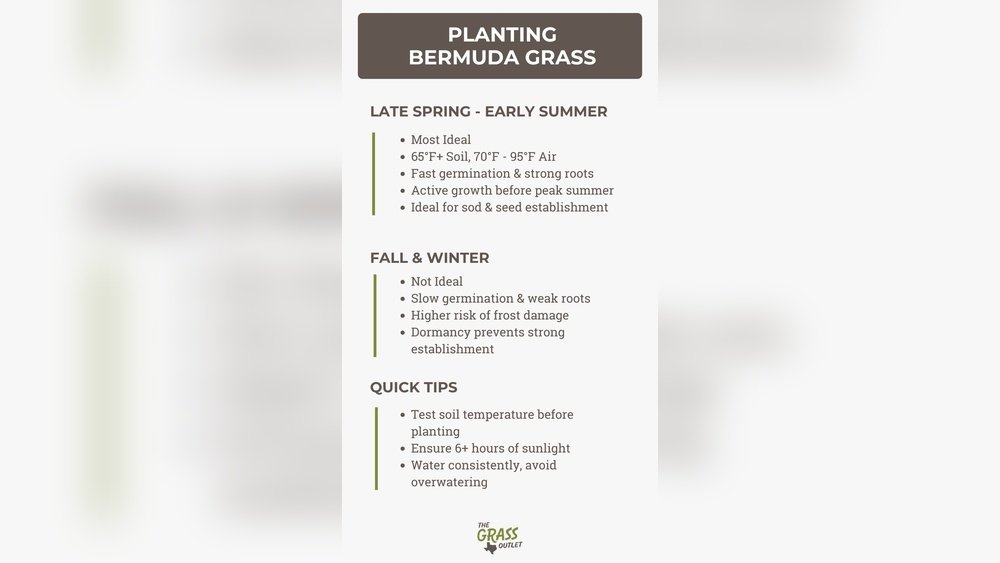
The best time to plant Bermuda grass depends on your climate, but generally, late spring to early summer is ideal. This timing ensures warm soil temperatures above 65°F, which helps seeds germinate and roots establish before cooler weather sets in. Planting during this window promotes healthy, vigorous growth.
Are you ready to transform your lawn into a lush, green paradise? Knowing the best time to plant Bermuda grass can make all the difference in how quickly and beautifully your yard grows.
Plant it too early or too late, and you might face slow growth or patchy spots that spoil your outdoor space. But when you get the timing just right, your Bermuda grass will thrive, giving you a thick, vibrant lawn that stands out.
Keep reading to discover exactly when to plant Bermuda grass so you can enjoy a healthy, stunning yard all season long.

Credit: thegrassoutlet.com
Ideal Planting Seasons
Knowing the best time to plant Bermuda grass helps your lawn grow strong and green. The right season affects how fast the grass takes root and spreads. Planting during ideal weather gives the grass the energy it needs to thrive. Understanding each season’s benefits and challenges guides your planting plan.
Spring Planting Benefits
Spring is a top choice to plant Bermuda grass. The soil warms up, making it easier for seeds to sprout. Rainfall often increases, helping young grass get enough water. Days get longer, giving more sunlight for growth. Planting in spring lets grass establish before summer heat arrives. This leads to a thicker, healthier lawn.
Summer Considerations
Summer can be tough for new Bermuda grass. High heat and dry conditions slow growth. Young grass may need more watering to stay alive. Planting during early summer can work if you water regularly. Late summer planting risks stress from heat and drought. Careful attention is needed to help grass survive.
Fall Planting Pros And Cons
Fall offers cooler temperatures and less stress for Bermuda grass. The soil still holds warmth, aiding root growth. Less heat means less water is needed. Grass planted in fall has time to build roots before winter. On the downside, frost can damage young grass. Early fall planting is best to avoid cold damage.

Credit: theturfgrassgroup.com
Climate Impact On Growth
Climate plays a key role in how well Bermuda grass grows. The grass thrives in warm weather but struggles in cold conditions. Understanding your local climate helps you choose the best planting time. This improves the grass’s chance to grow healthy and strong.
Warm Vs. Cool Climates
Bermuda grass grows best in warm climates with long summers. It needs soil temperatures above 65°F to start growing. In warm places, plant Bermuda grass in late spring or early summer. This gives it time to root before cooler weather.
Cool climates with short summers make it harder for Bermuda grass to grow. Cold soil slows seed germination and growth. Planting too early risks frost damage. In these areas, wait until soil warms fully, usually late spring or early summer.
Regional Planting Guidelines
Southern states like Texas, Florida, and Georgia offer ideal conditions. Plant Bermuda grass from April to June here. The warm soil and air speed up growth.
Northern areas need more care. Plant only after last frost, usually in late May or June. Use faster-growing Bermuda varieties for better success.
Check local extension services for advice. They provide region-specific planting times and tips. This local knowledge helps your Bermuda grass thrive.
Soil Preparation Tips
Preparing soil properly is key for healthy Bermuda grass growth. Good soil helps grass roots grow deep and strong. It also improves water and nutrient absorption. Taking time to prepare soil right leads to a greener, thicker lawn.
Soil Testing Importance
Soil testing shows what nutrients your soil needs. It reveals pH levels and nutrient balance. Knowing this helps avoid adding wrong fertilizers. Testing is simple and affordable. It guides you to choose the best soil amendments. Testing before planting saves time and money later.
Amending Soil For Success
Adding organic matter like compost improves soil texture. It increases air and water flow around roots. Lime can adjust soil pH if too acidic. Fertilizers supply nutrients based on soil test results. Mix amendments well into the top 6 inches of soil. Smooth the surface and remove debris before planting seeds.
Planting Methods
Choosing the right planting method affects how well Bermuda grass grows. Each method has unique steps and benefits. Understanding these options helps pick the best one for your lawn.
Seeding Techniques
Seeding is the most common way to plant Bermuda grass. Spread seeds evenly on prepared soil. Lightly rake the seeds into the soil for better contact. Water the area gently but often. This method is cost-effective and allows good coverage.
Sodding Advantages
Sodding uses pieces of grass already grown on soil. Lay sod directly on the ground and press it down firmly. It gives instant green coverage and controls erosion quickly. Sod needs regular watering until it roots well. This method suits those wanting fast results.
Sprigging Approach
Sprigging involves planting small grass stems called sprigs. Place sprigs in rows on prepared soil. Cover lightly with soil to keep moisture in. Water often to help sprigs grow roots fast. This method is cheaper than sod but takes longer to fill in.
Watering And Maintenance
Watering and maintenance are key to growing healthy Bermuda grass. Proper care helps the grass grow thick and green. It also prevents weeds and disease. Understanding the right watering and fertilization times can save water and promote strong roots.
Irrigation Schedules
Bermuda grass needs about one inch of water each week. Water deeply but less often. This encourages roots to grow deeper into the soil. Early morning watering reduces water loss from evaporation. Avoid watering late in the day to prevent fungal diseases. Adjust watering based on weather and soil type. Sandy soils may need more frequent watering than clay soils.
Fertilization Timing
Fertilize Bermuda grass when it starts to grow in spring. Use a balanced fertilizer with nitrogen, phosphorus, and potassium. Apply nitrogen every six to eight weeks during the growing season. Avoid fertilizing in late fall or winter when grass growth slows. Proper fertilization improves color and helps grass recover from stress. Always follow the recommended fertilizer rates on the package.
Common Challenges
Planting Bermuda grass can bring many benefits, but it also comes with common challenges. Understanding these issues helps you take better care of your lawn. Challenges like weeds, pests, and drought can affect the growth of Bermuda grass. Managing these problems early ensures a healthy, green lawn.
Weed Control
Weeds compete with Bermuda grass for nutrients and water. They grow quickly and can take over your lawn. Removing weeds early prevents them from spreading. Use a pre-emergent herbicide to stop weed seeds from sprouting. Pull out large weeds by hand to protect your grass.
Pest Management
Pests like grubs and armyworms damage Bermuda grass roots and blades. They cause brown patches and weak grass growth. Inspect your lawn regularly for signs of pests. Treat infestations with safe insecticides. Encourage natural predators like birds to reduce pest problems.
Dealing With Drought
Bermuda grass needs water to stay green and healthy. Drought stress causes the grass to turn brown and thin out. Water your lawn deeply but less often to promote strong roots. Use mulch to keep soil moist. Avoid watering in the heat of the day to reduce evaporation.
Expert Tips For Success
Planting Bermuda grass can be simple with the right tips. Experts share advice to help your lawn grow strong and green. This guide covers the best ways to plant and care for Bermuda grass. Follow these expert tips for success.
Timing Adjustments
Plant Bermuda grass when soil temperatures reach 65°F or higher. This usually happens in late spring or early summer. If you live in cooler areas, wait until the warmest part of the year. Avoid planting too early to prevent slow growth or damage.
Check local weather patterns before planting. Sudden cold spells can hurt new grass. Adjust your planting schedule to match your region’s climate. Proper timing helps Bermuda grass root deeply and grow fast.
Tools And Equipment
Use a soil thermometer to measure temperature accurately. A rake helps clear debris and smooth the soil surface. A spreader ensures even seed or sprig distribution. Watering tools, like a sprinkler, keep the soil moist.
Prepare the soil with a tiller or garden fork. This breaks up hard soil for better root growth. Clean tools before use to avoid spreading diseases. Proper equipment makes planting easier and more effective.
Monitoring Growth
Watch your Bermuda grass closely after planting. Keep soil moist but not soggy to encourage growth. Check for weeds and remove them quickly to reduce competition. Look for signs of pests or diseases and treat early.
Measure grass height weekly to track progress. Healthy Bermuda grass should grow about 1 to 2 inches per week. Adjust watering and care based on growth and weather. Regular monitoring helps maintain a lush, green lawn.

Credit: theturfgrassgroup.com
Frequently Asked Questions
When Is The Best Season To Plant Bermuda Grass?
The best time to plant Bermuda grass is late spring to early summer. Soil temperatures should be above 65°F for optimal growth. Warm weather promotes seed germination and strong root development. Avoid planting in cold or wet conditions to prevent poor establishment.
How Long Does Bermuda Grass Take To Grow?
Bermuda grass typically takes 7 to 21 days to germinate. Full lawn coverage usually occurs within 6 to 8 weeks. Growth speed depends on temperature, soil quality, and watering. Warm temperatures accelerate growth, while cold slows it down.
Can Bermuda Grass Be Planted In Fall?
Planting Bermuda grass in fall is not ideal. Cooler temperatures slow germination and growth. It may fail to establish before winter dormancy. Spring or early summer planting ensures better survival and lush growth.
What Soil Conditions Suit Bermuda Grass Best?
Bermuda grass thrives in well-drained, sandy or loamy soil. Soil pH should range between 5. 8 and 7. 0. Proper soil preparation improves seed contact and root growth. Avoid heavy clay soils that retain water and cause root rot.
Conclusion
Planting Bermuda grass at the right time helps it grow strong and green. Warm weather and soil above 65°F create the best start. Early spring or late spring works well in most areas. Avoid planting in cold or very hot months.
Water the grass regularly and give it sunlight. Healthy Bermuda grass makes your yard look fresh and inviting. Timing and care together bring the best results. Start now, and enjoy a beautiful lawn all season long.
