


If you want a lush, green Bermuda grass lawn that turns heads, you need to know the right care steps. Your lawn is more than just grass—it’s your outdoor sanctuary, a place for family, fun, and relaxation.
But without proper care, Bermuda grass can lose its vibrant color and healthy feel. Imagine stepping outside onto soft, thick grass that stays green through summer heat and recovers quickly from wear. This guide will show you exactly how to make that happen.
Keep reading to discover simple, effective tips that will transform your lawn into the envy of your neighborhood.
Credit: www.lawnstarter.com
Choosing The Right Bermuda Grass
Choosing the right Bermuda grass is the first step to a healthy lawn. Different types suit different needs and environments. Picking the correct variety helps your grass grow strong and stay green longer. Consider your climate and soil for the best match.
Common Bermuda Varieties
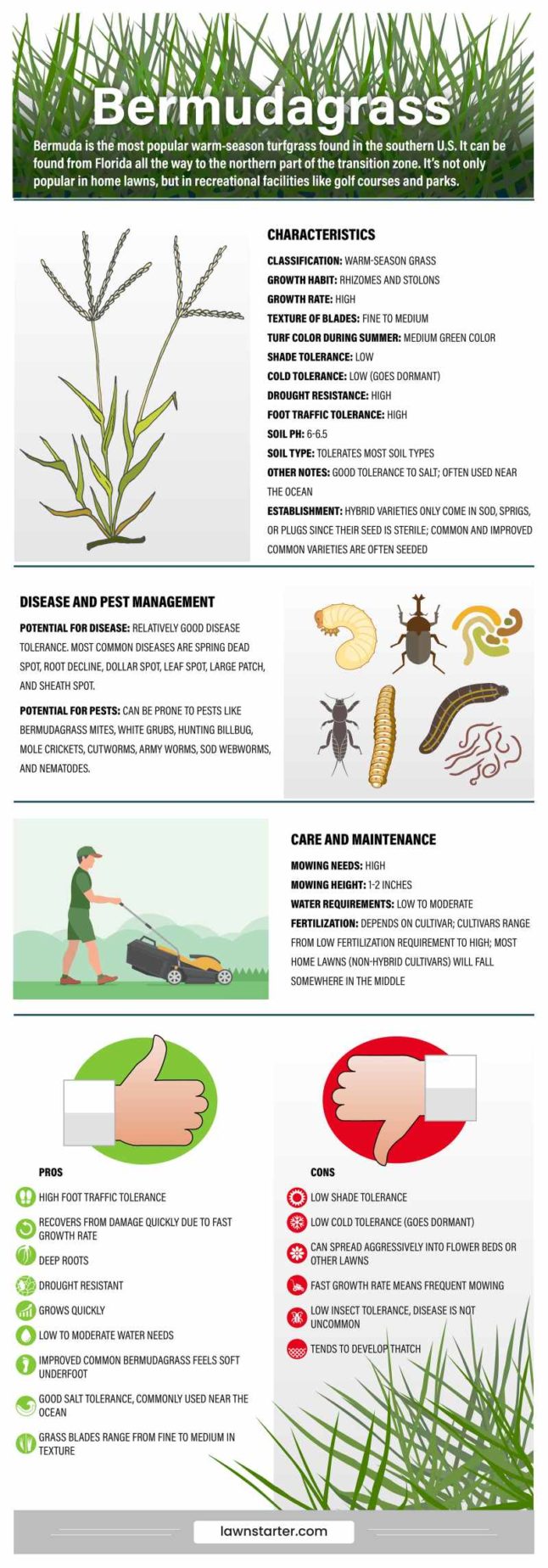
Bermuda grass comes in many types. Common varieties include Common Bermuda, Tifway, and Celebration. Common Bermuda is tough and grows fast. Tifway is popular for sports fields and lawns. Celebration has a dark green color and stays soft. Each variety has unique features for different uses.
Selecting Based On Climate
Climate affects how well Bermuda grass grows. Warm climates suit most Bermuda types. Some varieties handle heat better than others. Cooler areas may need cold-tolerant types like TifTuf. Know your local weather to pick a grass that thrives year-round.
Soil Compatibility
Soil type impacts Bermuda grass health. Sandy soils drain well and fit many Bermuda grasses. Clay soils hold water and need varieties that tolerate moisture. Test your soil before planting. Choose grass that matches your soil for strong roots and growth.
Credit: turfmasterslawncare.com
Preparing Your Lawn Area
Preparing your lawn area is the first step to a healthy Bermuda grass lawn. This stage sets the base for strong growth and even coverage. A well-prepared lawn space helps Bermuda grass thrive through seasons. Follow the key steps below to get your soil and area ready for planting.
Clearing And Leveling
Remove all debris, rocks, and old grass from the lawn area. Clear away sticks, roots, and any trash that can block growth. Level the ground by filling low spots and smoothing bumps. A flat surface helps water spread evenly and prevents puddles. Use a rake or lawn roller for best results.
Soil Testing And Amendment
Test your soil to check its pH and nutrient levels. Bermuda grass prefers a pH between 5.8 and 7.0. Adjust the soil by adding lime to raise pH or sulfur to lower it. Add organic matter like compost to improve soil texture and nutrients. Healthy soil supports strong roots and green leaves.
Proper Drainage Setup
Ensure your lawn area drains water well to avoid soggy spots. Poor drainage causes root rot and weak grass. Check for areas where water pools after rain. Create gentle slopes or install drainage pipes if needed. Good drainage keeps Bermuda grass healthy and lush.
Planting Bermuda Grass
Planting Bermuda grass sets the foundation for a healthy, green lawn. This grass thrives in warm climates and needs good preparation. Choosing the right planting method helps the grass grow strong and dense. Understanding seeding, sodding, and sprigging methods is key to success. Each method has its own benefits and suits different lawn needs.
Seeding Techniques
Seeding is an affordable way to plant Bermuda grass. Spread seeds evenly on well-prepared soil. Lightly rake the soil to cover seeds with a thin layer. Water the area gently but regularly to keep seeds moist. Germination usually starts within 7 to 14 days. Avoid heavy foot traffic during this time. Seeding works well for large areas with good soil.
Sodding Tips
Sodding gives instant green cover for your lawn. Lay sod pieces tightly together on a smooth soil surface. Press the sod down to remove air pockets. Water sod thoroughly right after installation. Keep watering daily until roots grow into the soil. Sod is great for quick results and erosion control. Choose fresh sod for best establishment.
Sprigging Methods
Sprigging uses small pieces of Bermuda grass stems. Plant sprigs in rows about 6 to 12 inches apart. Cover sprigs lightly with soil to protect them. Water daily to keep soil moist and help roots grow. Sprigging is less costly than sodding but slower to fill in. It works well in large areas with limited budget.
Watering Schedule For Growth
Watering Bermuda grass properly helps it grow thick and green. A good watering schedule keeps the roots healthy and strong. Water at the right times and with the right amount. This helps the grass absorb water well and stay lush.
Frequency And Timing
Water Bermuda grass about 2 to 3 times a week. Early morning is the best time to water. The soil stays moist longer and less water evaporates. Avoid watering in the heat of the day to save water.
Deep Vs. Shallow Watering
Deep watering helps roots grow deep into the soil. Water slowly and enough to soak the soil 6 to 8 inches deep. Shallow watering makes roots stay near the surface. This causes weak grass that dries out fast.
Adjusting For Weather
Water less during cool or rainy days. Increase watering during hot, dry weather. Watch the grass color and soil moisture to guide watering. Too much water can harm Bermuda grass too.
Mowing Practices
Mowing Bermuda grass is key for a healthy, green lawn. Cutting at the right height and frequency keeps grass strong. Using the proper mower helps avoid damage. Follow simple mowing tips for best results.
Optimal Height Settings
Set your mower blade to 1 to 2 inches. This height helps grass grow thick. Cutting too short weakens roots. Taller grass shades soil and holds moisture. Adjust height with season changes.
Mowing Frequency
Mow Bermuda grass every 5 to 7 days. Regular cutting prevents stress and diseases. Avoid removing more than one-third of grass blade. Frequent mowing encourages dense growth. Skip mowing during drought or extreme heat.
Equipment Recommendations
Use a sharp blade for clean cuts. Dull blades tear grass and invite pests. A reel mower works well for small yards. For larger lawns, a rotary mower is best. Check mower settings often to keep proper height.
Credit: www.youtube.com
Fertilizing Your Lawn
Fertilizing your Bermuda grass lawn helps it grow strong and stay green. The right fertilizer gives the grass the nutrients it needs. Feeding your lawn properly also helps fight weeds and stress from heat or drought. Knowing which fertilizer to use, when to apply it, and how much is important for a healthy lawn.
Choosing Fertilizer Types
Pick a fertilizer with nitrogen, phosphorus, and potassium. Nitrogen helps grass grow thick and green. Phosphorus supports root growth. Potassium improves disease resistance. Use a fertilizer made for warm-season grasses like Bermuda. Slow-release fertilizers feed the grass over time. This keeps the lawn healthy longer and reduces the risk of burning.
Application Timing
Apply fertilizer during the growing season, usually spring through early fall. Start feeding in late spring, after the grass fully wakes up. Avoid fertilizing before the grass grows actively or during dormancy in winter. Spread fertilizer evenly for the best results. Water the lawn lightly after fertilizing to help nutrients soak in.
Avoiding Over-fertilization
Too much fertilizer can harm Bermuda grass. It causes fast, weak growth and can burn the lawn. Follow the recommended amount on the fertilizer package. Applying more does not mean better results. Over-fertilizing also wastes money and pollutes the environment. Stick to a regular schedule and measure carefully to keep your lawn safe.
Controlling Weeds And Pests
Controlling weeds and pests is key to keeping a Bermuda grass lawn healthy. Weeds steal nutrients and water from the grass. Pests damage grass blades and roots. Both reduce the lawn’s beauty and strength. Regular care helps prevent big problems.
Common Bermuda Lawn Weeds
Dandelions, crabgrass, and clover often invade Bermuda lawns. They grow fast and spread quickly. These weeds compete with Bermuda grass for sunlight and nutrients. Some have deep roots that are hard to remove. Spotting weeds early makes control easier.
Effective Weed Control Methods
Manual removal works well for small weed patches. Pull out weeds by hand, making sure to get the roots. Use mulch to block weed growth around the lawn edges. Pre-emergent herbicides stop weed seeds from sprouting. Apply herbicides carefully, following label instructions. Avoid overuse to protect grass health.
Managing Insects And Diseases
Chinch bugs and armyworms are common pests in Bermuda grass. They chew on grass blades and cause yellow spots. Fungus diseases like dollar spot also harm lawns. Regular mowing and watering reduce pest and disease risks. Use insecticides and fungicides only if damage is severe. Early detection helps treat problems faster.
Seasonal Care Tips
Seasonal care plays a big role in keeping your Bermuda grass lawn healthy and green all year. Each season demands different attention and tasks. Knowing what to do and when helps your lawn grow strong and resist weeds and pests.
Spring Lawn Preparation
Start by cleaning up leaves and debris from winter. Rake the lawn to remove dead grass and thatch. Aerate the soil to improve air and water flow. Apply a balanced fertilizer to boost growth. Overseed bare spots with Bermuda grass seed. Water the lawn deeply but less often.
Summer Maintenance
Raise your mower blade to 2 to 3 inches high. This shade helps roots stay cool and moist. Water the lawn early in the morning to reduce evaporation. Check for pests and treat quickly if found. Avoid heavy foot traffic during hot times. Mow regularly to keep grass healthy and neat.
Fall Lawn Care
Lower the mower blade gradually as temperatures drop. Apply a fertilizer high in potassium to strengthen roots. Remove fallen leaves to prevent mold and disease. Overseed thin areas for a thicker lawn next spring. Continue watering but reduce frequency as weather cools.
Winter Dormancy Management
Bermuda grass goes dormant and turns brown in winter. Avoid heavy traffic to prevent soil compaction. Keep lawn free of debris to reduce disease risk. Do not fertilize or water much during dormancy. Prepare tools and plan for spring lawn care.
Repairing And Renovating Lawn
Repairing and renovating a Bermuda grass lawn keeps it healthy and green. Over time, lawns can develop bare spots, thatch buildup, and thinning grass. Fixing these problems helps your lawn grow thick and look fresh again. Follow the steps below to restore your Bermuda grass lawn effectively.
Dealing With Bare Spots
Bare spots happen because of foot traffic, pests, or weather damage. Clear the area by removing dead grass and debris. Loosen the soil gently to help new roots grow. Spread Bermuda grass seed or lay sprigs over the bare patch. Water the spot lightly but regularly. Keep pets and people off the area until grass fills in.
Overseeding Strategies
Overseeding adds new grass seed to thin areas to boost lawn density. Choose high-quality Bermuda grass seed for best results. Spread seed evenly across the lawn using a spreader. Lightly rake the soil to cover the seeds. Water the lawn daily to keep soil moist. Overseed in late spring or early summer for warm weather growth.
Thatch Removal
Thatch is a layer of dead grass and roots that blocks water and nutrients. Remove thatch with a dethatcher or rake. Do this in late spring when Bermuda grass grows quickly. After dethatching, water and fertilize the lawn to help recovery. Removing thatch improves lawn health and helps grass grow stronger.
Frequently Asked Questions
How Often Should I Water Bermuda Grass Lawn?
Water Bermuda grass deeply once or twice a week. Avoid frequent shallow watering to promote deep root growth. Adjust watering based on weather and soil moisture for best results.
What Is The Ideal Mowing Height For Bermuda Grass?
Maintain Bermuda grass at 1 to 2 inches tall. Mowing too low weakens the grass, while too high causes thatch buildup. Regular mowing encourages healthy, dense turf.
When Is The Best Time To Fertilize Bermuda Grass?
Fertilize Bermuda grass during the growing season, typically spring through early fall. Use a balanced fertilizer every 6-8 weeks for optimal growth and green color.
How Do I Prevent Weeds In Bermuda Grass Lawns?
Apply pre-emergent herbicides in early spring to prevent weed seeds from germinating. Maintain thick, healthy grass through proper mowing and fertilizing to naturally reduce weeds.
Conclusion
Caring for your Bermuda grass lawn takes regular effort and attention. Water it deeply but not too often. Mow the grass to the right height to keep it healthy. Fertilize during the growing season to help it grow strong. Watch out for weeds and pests to protect your lawn.
With simple steps, your Bermuda grass will stay green and thick. A well-cared lawn makes your yard look great all year. Keep these tips in mind for a beautiful Bermuda grass lawn. Easy care leads to lasting beauty.
