
Bermuda grass can be a persistent weed in fescue lawns, disrupting uniformity and appearance. This guide provides practical strategies to eliminate unwanted Bermuda grass from your fescue. We’ll cover both manual removal techniques for smaller infestations and selective chemical treatments for more challenging situations, ensuring you can reclaim your beautiful fescue landscape.
Are you tired of seeing those unsightly patches of coarse, warm-season Bermuda grass invading your beautiful, fine-bladed fescue lawn? You’re not alone. Bermuda grass, with its aggressive spreading habit, can quickly take over, turning a lush, uniform fescue carpet into a patchy, uneven mess. But don’t despair! With the right approach, you can effectively kill Bermuda grass in your fescue and restore the intended look and feel of your lawn.
This comprehensive guide will walk you through the process. We’ll explore the best methods for tackling this persistent weed, from careful manual removal to strategic chemical applications. You’ll learn how to identify Bermuda grass, understand its growth habits, and implement a plan that suits your lawn’s specific needs. By the end of this guide, you’ll have the knowledge and confidence to banish Bermuda grass and enjoy a healthier, more attractive fescue lawn.
Key Takeaways
- Understand the Enemy: Bermuda grass is a warm-season grass that thrives in summer, spreading aggressively via rhizomes and stolons, making it a challenge to eradicate from cool-season fescue lawns.
- Manual Removal is Key for Small Patches: For localized Bermuda grass outbreaks, digging out the affected areas, including roots and runners, is the most precise and eco-friendly method.
- Chemical Control Requires Caution: Non-selective herbicides will kill both Bermuda and fescue, so careful application is crucial. Selective herbicides are available but may require multiple applications.
- Timing is Everything: Treating Bermuda grass when it’s actively growing and before it goes dormant in cooler months yields the best results.
- Persistence Pays Off: Eradicating Bermuda grass from fescue is rarely a one-and-done process; expect to monitor and reapply treatments as needed.
- Fescue Recovery is Essential: After Bermuda grass removal, focus on strengthening your fescue by proper mowing, watering, and fertilization to help it fill in and prevent future weed encroachment.
- Integrated Approach is Best: Combining manual removal with targeted chemical treatments and proper lawn care practices offers the most comprehensive solution for long-term Bermuda grass control.
Understanding the Enemy: Bermuda Grass
Before we dive into the removal process, it’s essential to understand what you’re up against. Bermuda grass (Cynodon dactylon) is a warm-season perennial grass. This means it thrives in hot weather and becomes dormant, turning brown, when temperatures drop in the fall and winter. Fescue, on the other hand, is a cool-season grass, which prefers cooler temperatures and remains green throughout much of the year. This fundamental difference in growth cycles is both your biggest challenge and your greatest advantage in eradicating Bermuda grass from fescue.
Bermuda grass spreads aggressively through two primary means:
- Rhizomes: These are underground stems that grow horizontally and can send up new shoots. They are tough and can survive even if the above-ground parts are killed.
- Stolons: These are above-ground stems that creep along the soil surface and root at nodes, forming new plants.
These spreading mechanisms allow Bermuda grass to quickly colonize areas and outcompete slower-growing fescue. Recognizing these features will help you identify and target the weed more effectively.
Step 1: Identify Bermuda Grass
Accurate identification is the first critical step. Bermuda grass has distinct characteristics that set it apart from fescue.
Leaf Blade Appearance
- Bermuda grass has finer, narrower leaves than most fescues.
- The leaf blades are often grayish-green and can feel a bit rough to the touch.
- When mowed, fescue typically has a more upright, bunchy growth habit, while Bermuda grass tends to lie flatter.
Growth Pattern
- Look for runners (stolons) creeping across the soil surface, especially in sunny areas.
- In warmer months, you’ll see dense, spreading patches of Bermuda grass that can look significantly different from the surrounding fescue.
- During cooler months, Bermuda grass will turn brown and go dormant, while your fescue should remain green. This dormant period is a good indicator of its presence.
Seed Heads
- Bermuda grass produces distinctive seed heads that look like a series of small, finger-like structures at the top of a tall stalk.
- Fescue seed heads are typically more branched and feathery.
Step 2: Choose Your Strategy: Manual vs. Chemical Control
Once you’ve confirmed the presence of Bermuda grass, you need to decide on the best removal strategy. The size and extent of the infestation will largely dictate this choice.
Manual Removal: For Small Infestations
If you’re dealing with only a few small patches of Bermuda grass, manual removal is often the most effective and environmentally friendly option.
The Digging Method
This method requires patience and thoroughness. The goal is to remove all of the Bermuda grass, including its roots and runners.

Visual guide about How to Kill Bermuda Grass in Fescue
Image source: grass-killer.nyc3.cdn.digitaloceanspaces.com

Visual guide about How to Kill Bermuda Grass in Fescue
Image source: plantophiles.com
- Timing: It’s best to tackle manual removal when the soil is moist, making it easier to pull out the roots. Water the area deeply the day before you plan to dig.
- Tools: You’ll need a sharp spade, garden fork, or a specialized weed puller. A trowel can be useful for smaller, more delicate areas.
- Excavation: Carefully dig around the perimeter of the Bermuda grass patch. Aim to dig at least 6-8 inches deep, as Bermuda grass rhizomes can grow quite deep.
- Remove All Parts: Gently lift out the entire clump of soil and grass. Inspect the removed soil for any remaining roots or runners. Do not leave any fragments behind, as they can resprout.
- Dispose Properly: Bag all removed material and dispose of it in a sealed trash bag. Do not compost Bermuda grass, as the seeds and roots can survive the composting process.
- Repair the Area: Once the Bermuda grass is completely removed, you’ll have an empty spot. Fill this void with good quality topsoil.
Tip: For very persistent runners that extend beyond the visible patch, you might need to follow them and dig them out. This is where patience is truly a virtue.
Chemical Control: For Larger or Persistent Infestations
For widespread Bermuda grass problems, manual removal can be impractical. Chemical control might be necessary, but it requires careful consideration to avoid harming your fescue.
Understanding Herbicides
There are two main types of herbicides to consider:
- Non-Selective Herbicides (e.g., Glyphosate): These herbicides kill any plant they come into contact with. This means they will kill both the Bermuda grass and your fescue. If you use a non-selective herbicide, you will have to reseed the treated area with fescue.
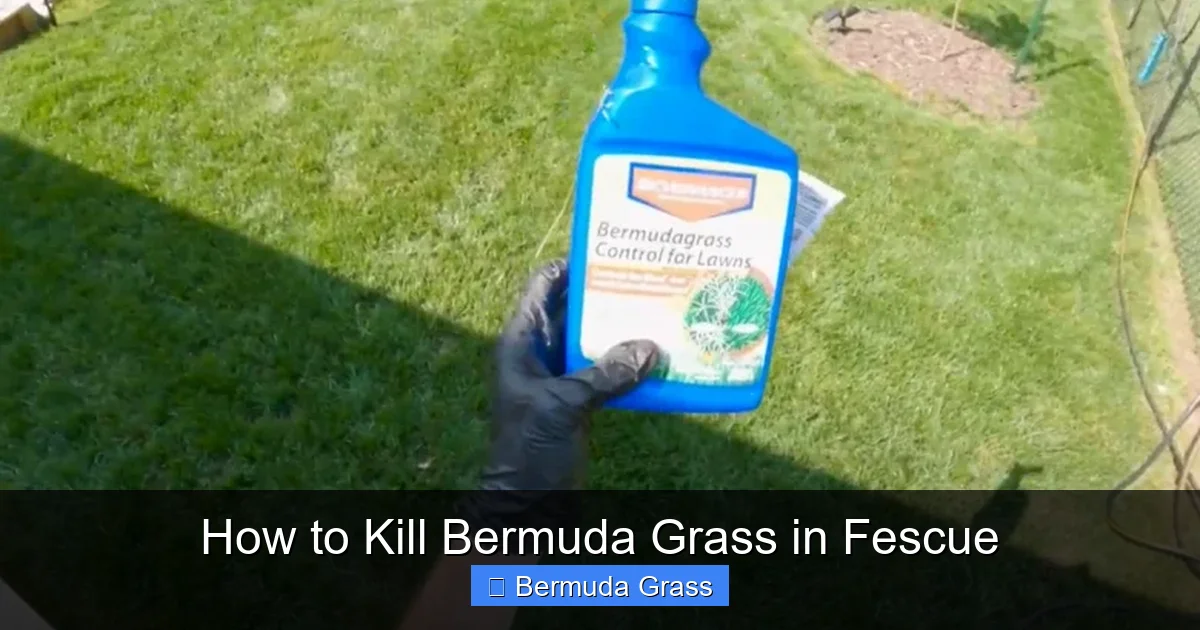
- Selective Herbicides: These herbicides are designed to target specific types of plants while leaving others unharmed. However, finding a selective herbicide that effectively kills Bermuda grass without harming fescue can be challenging. Many post-emergent herbicides labeled for broadleaf weed control will not affect grass weeds like Bermuda. Some herbicides are specifically formulated for warm-season grass control in cool-season turf, but their effectiveness against Bermuda grass can vary. Always read the product label carefully.
Application Methods and Timing
Regardless of the herbicide type, proper application is paramount.
- Timing is Crucial: The most effective time to treat Bermuda grass with herbicides is when it is actively growing and before it goes dormant in the fall. This typically means treating during the hot summer months. Avoid applying herbicides when temperatures are too high (above 85-90°F) as this can stress or damage your fescue. Also, avoid applying if rain is expected within 24-48 hours.
- Spot Treatment is Key: If using a non-selective herbicide, it’s vital to apply it only to the Bermuda grass. Use a sprayer with a shielded nozzle or a small paintbrush to apply the herbicide directly to the blades of the Bermuda grass. Avoid spraying in windy conditions.
- Multiple Applications May Be Needed: Bermuda grass is resilient. It often requires multiple applications of herbicide, spaced according to the product label instructions, to completely kill the root system.
- Follow Label Instructions: Always, always, always read and follow the instructions on the herbicide product label. This includes application rates, safety precautions, and waiting periods before re-entering the treated area or allowing pets and children to do so.
- Consider Professional Help: If you’re unsure about using herbicides or dealing with a very extensive infestation, consider hiring a professional lawn care service. They have the expertise and equipment to apply chemicals safely and effectively.
Step 3: Post-Treatment Care and Fescue Recovery
Once you’ve removed or treated the Bermuda grass, your work isn’t over. The next crucial steps involve helping your fescue recover and preventing future Bermuda grass invasions.
Repairing the Fescue Lawn
For Manually Removed Areas
After digging out Bermuda grass, you’ll have bare patches. These need to be filled in to prevent weeds from taking hold.
Visual guide about How to Kill Bermuda Grass in Fescue
Image source: grass-killer.nyc3.cdn.digitaloceanspaces.com
- Add Topsoil: Fill the excavated areas with a high-quality topsoil. Rake the soil smooth, ensuring it’s level with the surrounding lawn.
- Reseed: Use a fescue seed blend that matches your existing lawn. Spread the seeds evenly over the prepared soil.
- Water Consistently: Keep the newly seeded areas consistently moist. Light watering several times a day is usually best until the seeds germinate and the seedlings are established.
- Avoid Heavy Traffic: Keep foot traffic off the newly seeded areas until the grass is well-established (usually 3-4 weeks).
For Chemically Treated Areas
If you used a non-selective herbicide, the treated area will be dead grass (both Bermuda and fescue). You will need to:
- Remove Dead Material: Once the grass is completely dead, rake up all the dead vegetation.
- Prepare the Soil: Loosen the soil slightly with a rake.
- Reseed or Patch: Overseed the area with fescue seed as described above. If the treated area is small, you might be able to use fescue sod to quickly repair the spot.
- Follow Herbicide Label: If the herbicide label specifies a waiting period before reseeding, be sure to adhere to it.
Strengthening Your Fescue
A healthy, dense fescue lawn is your best defense against Bermuda grass and other weeds.
- Proper Mowing: Mow your fescue at the higher end of the recommended height (typically 3-4 inches). Taller grass shades the soil, making it harder for weed seeds to germinate and for Bermuda grass runners to establish. Use a sharp mower blade to make clean cuts.
- Adequate Watering: Water your fescue deeply and infrequently. This encourages deep root growth, making the grass more drought-tolerant and resilient. Aim for about 1 inch of water per week, including rainfall.
- Fertilization: Follow a regular fertilization schedule tailored to fescue’s needs. Proper nutrition will promote vigorous growth and help your lawn outcompete weeds. Soil testing can help you determine the best fertilizer blend.
- Aeration: Core aeration, done in the fall for fescue, can help improve soil structure, water penetration, and air circulation, all of which contribute to a healthier lawn.
Troubleshooting: Common Challenges
Even with the best efforts, you might encounter some challenges when trying to kill Bermuda grass in fescue.
Bermuda Grass Returns
This is the most common issue. Bermuda grass rhizomes can remain dormant for long periods or spread from neighboring properties. Continue with regular monitoring and spot treatments as needed. Persistence is key.
Accidental Fescue Damage
If you used a non-selective herbicide, you might have accidentally hit some fescue. Don’t worry; fescue is resilient and can often recover. Overseeding the damaged areas will help it fill in.
Weed-Free Area Spreads Bermuda Grass
If you’re removing Bermuda grass from a section of your lawn, be mindful that it could be spreading from surrounding areas. Consider creating a barrier or using targeted treatments along the borders of your fescue lawn.
Conclusion
Eliminating Bermuda grass from your fescue lawn is a process that requires patience, persistence, and the right strategy. By understanding Bermuda grass’s growth habits, accurately identifying it, and choosing between manual removal for small areas or carefully considered chemical control for larger infestations, you can achieve success. Remember to focus on the post-treatment care of your fescue, ensuring it remains healthy and dense to naturally suppress future weed growth. With consistent effort and these proven methods, you can transform your patchy lawn into a beautiful, uniform fescue haven. Happy lawn battling!