

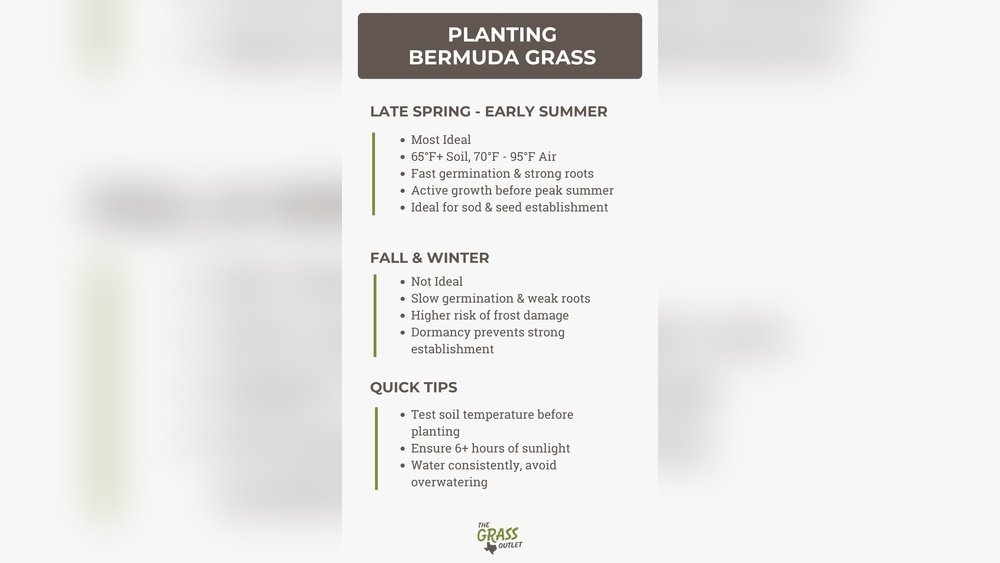
The best time to plant Bermuda grass seed is when soil temperatures are consistently between 65°F and 75°F, typically in late spring after the last frost. This warm soil encourages quick germination and healthy growth, giving your lawn the best chance to establish before the heat of summer.
Are you ready to give your lawn a fresh, green boost with Bermuda grass? Knowing exactly when to plant Bermuda grass seed can make all the difference between a patchy yard and a lush, carpet-like lawn you’ll love.
Plant too early or too late, and you risk slow growth or even seed failure. But don’t worry—this guide will help you pinpoint the perfect time to plant, so your grass thrives and your outdoor space becomes the envy of the neighborhood.
Keep reading to discover the key timing tips that will set you up for success!

Credit: thegrassoutlet.com
Best Seasons For Planting
Choosing the right season to plant Bermuda grass seed is very important. Planting at the best time helps the grass grow strong and healthy. The seeds need warm soil and air to sprout well. Planting too early or too late can cause poor growth or seed loss. Knowing the best seasons for planting can save time and effort.
Ideal Temperature Range
Bermuda grass seed grows best when soil temperatures are between 65°F and 75°F. This warmth helps seeds germinate quickly. Cooler soil slows down growth and may stop germination. Air temperatures should be warm but not too hot. Night temperatures above 60°F are ideal for young grass.
Spring Vs Summer Planting
Spring is a good time to plant Bermuda grass seed. The soil warms up, and there is enough rain to keep it moist. Grass has time to grow before hot summer days. Summer planting works but needs more watering. Hot weather helps growth but can dry out seeds fast. Watch the weather closely during summer planting.
Avoiding Frost Periods
Frost can kill Bermuda grass seedlings. Do not plant before the last frost date in your area. Wait until all danger of frost has passed. Planting too early risks seed damage and poor growth. After frost ends, the soil warms and seeds grow well. Check local frost dates before planting.
Soil Preparation Tips
Preparing the soil is a key step before planting Bermuda grass seed. Good soil helps the grass grow strong and healthy. It also makes sure the seed can sprout well. Taking time to prepare the soil can save effort later.
Testing Soil Quality
Test the soil to know its quality. You can buy a simple soil test kit. It checks the pH and nutrient levels. Bermuda grass prefers soil with a pH between 5.8 and 7.0. Testing helps you understand what the soil needs.
Amending Soil For Bermuda Grass
Add materials to improve the soil based on test results. Lime can raise soil pH if it is too low. Sulfur lowers pH if it is too high. Mix organic matter like compost to add nutrients. Good soil structure helps roots grow deep and strong.
Proper Soil Moisture Levels
Keep the soil moist but not soggy before planting. Moist soil helps seeds absorb water and start growing. Check soil with your fingers; it should feel damp. Avoid letting the soil dry out or flood. Proper moisture gives Bermuda grass the best start.
Seeding Techniques
Planting Bermuda grass seed needs careful seeding techniques. These steps help the grass grow thick and healthy. Good seeding means better grass coverage and less bare spots. Let’s explore the key methods to seed Bermuda grass right.
Choosing The Right Seed Type
Select seed types suited for your climate and soil. Bermuda grass has many varieties. Some grow faster or resist drought better. Pick seeds that match your lawn needs. Certified seeds ensure quality and purity. This choice sets the foundation for strong grass growth.
Seed Spreading Methods
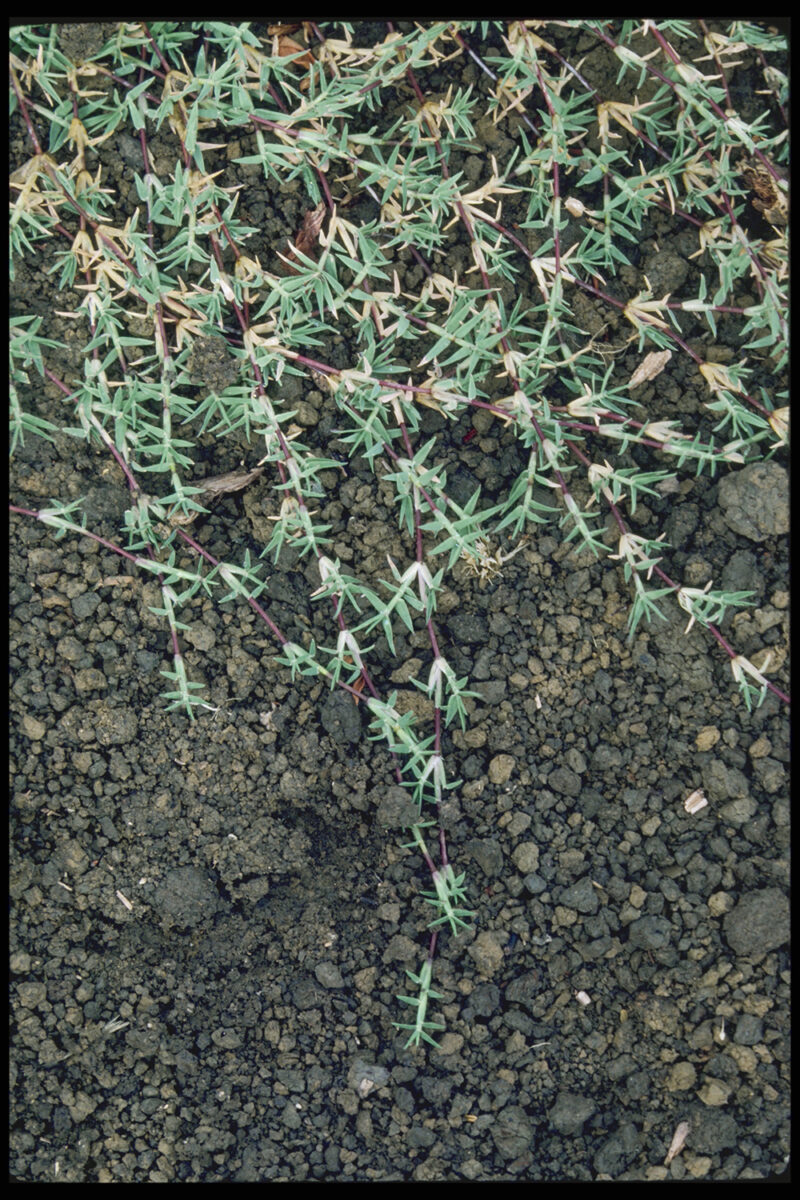
Spread seeds evenly for best results. Use a broadcast spreader for large areas. Hand spreading works for small patches. Avoid clumps or thin spots. Lightly rake the soil after spreading. This helps seeds contact the ground. Water gently but deeply to start germination.
Recommended Seeding Rates
Follow seeding rates on the seed package. Usually, 1 to 2 pounds per 1,000 square feet works well. Too much seed causes crowding and weak roots. Too little seed leaves bare spots. Proper rates help grass establish quickly and evenly.
Credit: www.sare.org
Watering And Maintenance
Watering and maintenance play a key role in growing healthy Bermuda grass from seed. Proper care helps seedlings grow strong and establish deep roots. This section explains how to water and maintain your new lawn for the best results.
Initial Watering Schedule
Right after planting, water the soil lightly but often. Keep the top soil moist, not soaked. Water two to three times daily for about 10 minutes each time. This helps the seeds stay wet and start to sprout. Reduce watering once seedlings appear.
Ongoing Care For Seedlings
Once grass sprouts, water less often but deeper. Water once a day or every other day. This encourages roots to grow down. Avoid overwatering, which can harm roots and cause disease. Watch the grass for dry spots and water those areas.
Fertilization Timing
Wait until seedlings grow to about two inches tall before fertilizing. Use a light nitrogen fertilizer for best results. Fertilize every four to six weeks during the growing season. This supports strong growth without burning young grass.
Common Planting Mistakes
Planting Bermuda grass seed seems simple but many make mistakes. These errors can stop grass from growing well. Avoiding common mistakes saves time and money. Your lawn will look green and healthy faster.
Planting Too Early Or Late
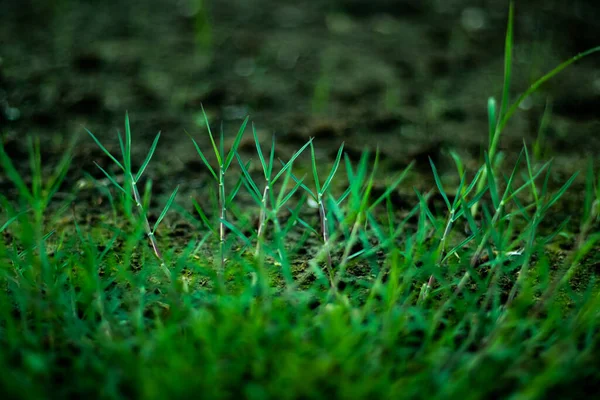
Planting Bermuda grass seed too early means cold soil. Cold soil slows seed growth and can kill seeds. Planting too late means less time for grass to grow. Grass may not spread well before cold weather. The best time is when soil is warm and stable.
Overwatering Or Underwatering
Water is important but too much can drown seeds. Overwatering causes seeds to rot and grass to die. Too little water stops seeds from sprouting. Water seeds lightly but often at first. Keep soil moist, not soaked, for best results.
Ignoring Soil Conditions
Soil type affects how well Bermuda grass grows. Poor soil can block seed growth. Test soil for pH and nutrients before planting. Add lime or fertilizer if needed. Good soil helps grass roots grow strong and deep.
Credit: theturfgrassgroup.com
Regional Planting Guidelines
Planting Bermuda grass seed varies by region. Each area has unique weather and soil conditions. These factors affect the best planting time and methods. Following regional planting guidelines helps ensure healthy grass growth. Understanding your local climate is key to success.
Regional tips help you adjust your planting schedule. They also guide how to care for your new lawn. Knowing whether you live in a warm or cool climate matters. Urban and rural areas also have different challenges. Let’s explore these important regional details.
Warm Climate Tips
Warm climates allow Bermuda grass to grow most of the year. Plant seeds in late spring or early summer. Soil temperature should be above 65°F for best germination. Water the soil lightly but often to keep it moist. Avoid planting during extreme heat to protect young grass.
Cool Climate Adjustments
Cool climates shorten the growing season for Bermuda grass. Plant seeds in late spring after the last frost. Soil temperature must reach at least 65°F before planting. Use mulch to keep soil warm and retain moisture. Start seeds early to give grass time to establish before cold.
Urban Vs Rural Considerations
Urban areas often have compacted soil and pollution. Loosen soil and add organic matter before planting. Water more frequently due to heat from buildings. Rural areas may have better soil but more pests. Use natural pest controls and monitor grass growth closely.
Frequently Asked Questions
When Is The Best Time To Plant Bermuda Grass Seed?
The best time to plant Bermuda grass seed is late spring to early summer. Soil temperatures should be above 65°F for optimal germination. Planting during this period ensures warm conditions that promote fast growth and healthy turf establishment.
How Long Does Bermuda Grass Seed Take To Germinate?
Bermuda grass seed typically germinates within 7 to 14 days. Warm soil and consistent moisture speed up the process. Cooler temperatures may delay germination, so planting in the right season is crucial for timely sprouting.
Can I Plant Bermuda Grass Seed In Fall?
Planting Bermuda grass seed in fall is not recommended. Cooler temperatures slow growth and increase the risk of frost damage. For best results, plant in spring or early summer when soil and air temperatures are warmer.
What Soil Temperature Is Ideal For Bermuda Grass Seed?
Ideal soil temperature for Bermuda grass seed is between 65°F and 70°F. This range ensures optimal seed germination and root development. Using a soil thermometer helps determine the best planting time for healthy lawn growth.
Conclusion
Plant Bermuda grass seed during warm months for best growth. Choose late spring or early summer when soil is warm. Water the seeds lightly and keep the soil moist. Avoid planting in cold or wet conditions. Patience is key; grass takes time to grow strong.
Follow these tips to enjoy a lush, green lawn. Your effort will pay off with healthy Bermuda grass. Start planting at the right time and watch your lawn thrive. Simple steps lead to great results.
