

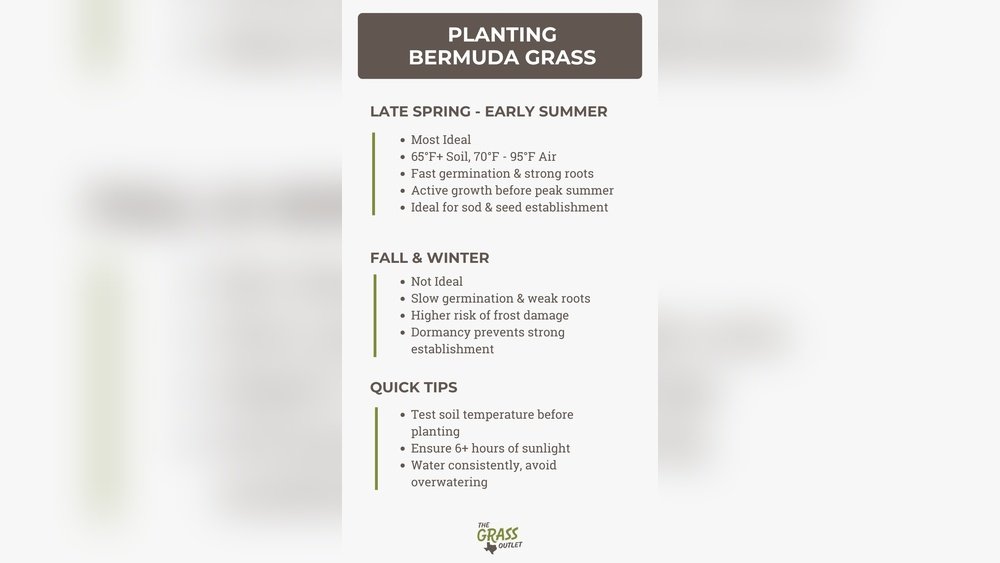
The best time to plant Bermuda grass seed is in late spring to early summer when soil temperatures reach 65°F to 75°F. Warm soil and air temperatures between 80°F and 95°F create ideal conditions for quick germination and strong root growth, ensuring a healthy, vibrant lawn.
Are you ready to transform your lawn into a lush, green paradise? Knowing exactly when to plant Bermuda grass seed can make all the difference between a patchy yard and a vibrant, healthy lawn.
Timing is everything, and if you get it right, you’ll save yourself weeks of frustration and extra work. You’ll discover the perfect planting window and simple tips to ensure your Bermuda grass thrives. Keep reading to learn how to give your lawn the best start possible.
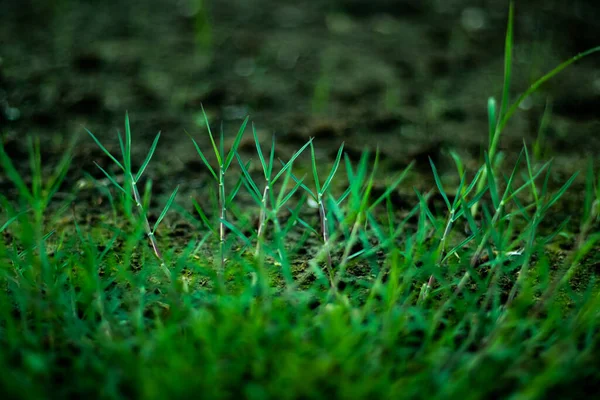
Credit: theturfgrassgroup.com
Best Time To Plant
Choosing the best time to plant Bermuda grass seed is key for a healthy lawn. Planting at the right moment helps the grass grow strong and green. Knowing the perfect temperature, season, and soil condition makes a big difference. Below are the important factors to consider for the best planting results.
Ideal Temperature Range
Bermuda grass grows best in warm weather. The soil temperature should be between 65°F and 75°F. Air temperatures between 80°F and 95°F help the seeds sprout quickly. Planting outside this range slows growth or may stop it. Warm soil wakes the seeds up and helps roots grow fast.
Seasonal Considerations
Late spring to early summer is the best season to plant Bermuda grass seed. The warm days and nights help the seeds sprout well. Avoid planting in early spring or late fall. Cold weather in these times can kill young grass. Summer heat supports fast growth and strong roots.
Soil Conditions
Healthy soil helps Bermuda grass grow better. The soil should be loose and well-drained. Avoid heavy clay or wet soil. Test soil pH to keep it between 5.8 and 7.0. Add organic matter if the soil is poor. Good soil holds moisture but does not stay soggy.
Preparing Your Lawn
Preparing your lawn before planting Bermuda grass seed is important. Good preparation helps seeds grow strong and healthy. Taking time to prepare the soil creates a better environment for grass roots.
Start by clearing the area. Remove old grass, weeds, and debris. This step stops them from competing with new seeds. A clean surface lets seeds touch the soil directly.
Clearing The Area
Remove rocks, sticks, and dead plants from the lawn. Use a rake or hoe to clear the soil well. Pull out weeds by the roots to prevent regrowth. This creates space for Bermuda grass seeds.
Soil Testing And Amendments
Test the soil to check its pH and nutrients. Bermuda grass grows best in soil with pH 5.8 to 7.0. Add lime if the soil is too acidic. Add sulfur if the soil is too alkaline. Use fertilizer to add needed nutrients. Balanced soil helps seeds sprout and grow.
Tilling And Leveling
Loosen the soil by tilling to improve air and water flow. Break up hard soil clumps for better root growth. Level the ground to avoid water pooling. Smooth soil also helps even seed spread. A flat, soft surface helps Bermuda grass seeds settle well.
Seeding Techniques
Planting Bermuda grass seed properly is key for a lush, green lawn. Using the right seeding techniques helps the grass grow strong and healthy. This section covers how to pick the seed, the best seeding rates and methods, and how to water after planting.
Choosing The Right Seed
Select high-quality Bermuda grass seed for the best results. Look for seed blends suited to your climate and soil type. Certified seeds have better germination rates. Avoid old or low-quality seeds that may not grow well. Choose seed with a purity label for confidence.
Seeding Rates And Methods
Spread seed evenly to avoid bare spots or crowding. Use about 1 to 2 pounds of seed per 1,000 square feet. For larger areas, use a broadcast spreader for uniform coverage. Lightly rake the soil after spreading to cover seeds. Avoid burying seeds too deep; they need light to sprout.
Watering After Seeding
Keep the soil moist after planting to help seeds germinate. Water lightly but often, about 2 to 3 times daily. Avoid heavy watering that washes seeds away. Once seedlings appear, reduce watering frequency but increase depth. Proper watering encourages deep root growth and strong grass.
Caring For New Grass
Caring for new Bermuda grass seed is key to a healthy lawn. The first few weeks after planting are critical. The grass needs gentle care to grow strong roots and green blades. Proper watering, fertilizing, and weed control help the grass thrive. Follow these simple steps to give your new lawn the best start.
Watering Schedule
Water the new grass lightly but often. Keep the soil moist, not soaked. Water two to three times a day for the first two weeks. Use a fine spray to avoid washing away seeds. After two weeks, water once a day deeply. This encourages roots to grow deeper. Reduce watering as grass matures.
Fertilizing Tips
Apply a starter fertilizer high in phosphorus at planting. Phosphorus helps root growth. Avoid too much nitrogen early on; it can burn young grass. After four to six weeks, use a balanced fertilizer. Follow package instructions carefully. Fertilize every six to eight weeks during growing season. Healthy grass gets strong and green faster.
Weed Control
Keep weeds away from new grass. Weeds compete for water and nutrients. Avoid using herbicides until grass is well established. Pull weeds by hand gently. Mulch around the area if needed to block weed seeds. A thick, healthy lawn naturally limits weed growth over time.
Common Challenges
Planting Bermuda grass seed can bring great results. Yet, there are common challenges to face. These issues affect growth and health. Knowing how to handle them saves time and effort.
Dealing With Pests
Pests like grubs and chinch bugs harm young Bermuda grass. They eat roots and leaves. This weakens the grass quickly. Watch for yellow patches or thinning areas. Use natural insecticides or beneficial nematodes. These control pests without harsh chemicals. Regular lawn inspection helps catch problems early.
Preventing Disease
Bermuda grass can get fungal diseases like dollar spot or leaf spot. These cause brown or white spots on leaves. Poor drainage and overwatering increase risk. Water early in the morning to let grass dry. Avoid thick thatch layers by raking regularly. Choose disease-resistant grass seed varieties for better protection.
Fixing Patchy Growth
Patchy grass appears when seeds fail to sprout evenly. Soil compaction and poor soil quality cause this. Aerate soil to improve air and water flow. Add organic compost to boost nutrients. Reseed bare spots and keep them moist. Consistent care helps fill empty patches fast.
Credit: theturfgrassgroup.com
When To Avoid Planting
Knowing when to avoid planting Bermuda grass seed is key to a healthy lawn. Planting at the wrong time can cause poor growth and wasted effort. Some weather and soil conditions can stop seeds from sprouting. Watch out for cold, drought, and soil problems before planting.
Cold Weather Risks
Bermuda grass seed does not grow well in cold weather. Temperatures below 65°F slow down seed germination. Frost can kill young seedlings quickly. Planting in early spring or late fall is risky. Wait until the soil warms up in late spring or early summer.
Drought Conditions
Dry soil is bad for Bermuda grass seed. Seeds need moisture to sprout and grow strong. Planting during drought stops seed from getting enough water. The grass will struggle to survive in dry conditions. Avoid planting if rain or irrigation is not available.
Soil Complications
Soil that is too hard or poor in nutrients harms seed growth. Compacted soil blocks seed roots from spreading. Sandy or rocky soil drains water too fast. Acidic or alkaline soil can stop seed from growing. Test soil before planting and fix any problems first.

Credit: thegrassoutlet.com
Frequently Asked Questions
When Is The Best Time To Plant Bermuda Grass Seed?
The ideal time to plant Bermuda grass seed is late spring to early summer. Soil temperatures should be consistently above 65°F. This warm period encourages fast germination and healthy growth.
How Long Does Bermuda Grass Seed Take To Germinate?
Bermuda grass seed typically germinates within 7 to 14 days. Warmer soil speeds up germination. Proper watering and soil preparation improve seed sprouting success.
Can Bermuda Grass Be Planted In Fall Or Winter?
Planting Bermuda grass in fall or winter is not recommended. Cooler temperatures slow germination. It’s best to seed during warm months for optimal growth.
How Do Soil Conditions Affect Bermuda Grass Seed Growth?
Bermuda grass thrives in well-drained, fertile soil with a pH of 5. 8 to 7. 0. Good soil preparation boosts seed germination and root development, ensuring a lush lawn.
Conclusion
Plant Bermuda grass seed when soil warms to at least 65°F. Early spring or late summer works best. Warm soil helps seeds grow strong roots fast. Water the area gently and keep it moist. Avoid planting in cold or wet weather.
Patience matters—grass takes time to fill in. Watch for weeds and remove them quickly. Healthy soil and proper care create a green, lush lawn. Follow these steps to enjoy a beautiful Bermuda grass yard. Your efforts will pay off with a thick, green lawn.
