

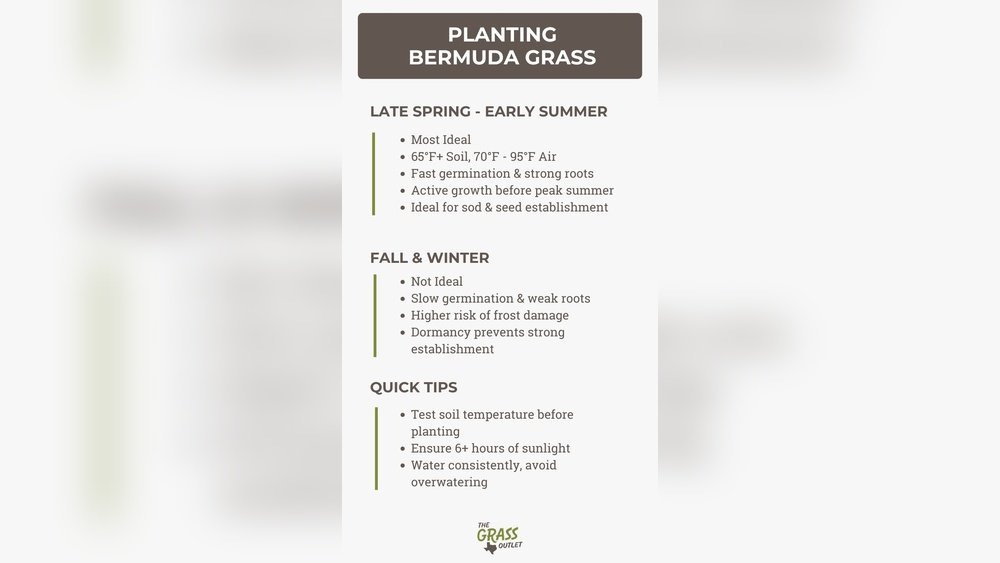
The best time to plant Bermuda grass seed is in late spring to early summer when soil temperatures reach 65°F to 75°F. This warm period encourages quick germination and strong root growth, giving your lawn the best chance to establish before the heat of summer or cooler fall weather sets in.
Are you ready to transform your lawn with lush, green Bermuda grass? Knowing the perfect time to plant Bermuda grass seed is the key to a vibrant, healthy yard that stands out.
Plant too early or too late, and you risk weak growth or bare patches. But don’t worry—this guide will help you pinpoint the ideal planting window so your grass thrives all season long. Keep reading to discover exactly when you should plant your Bermuda grass seed and how to give it the best start possible.
Your dream lawn is closer than you think!

Credit: thegrassoutlet.com
Ideal Climate For Bermuda Grass
Bermuda grass thrives best in warm climates. It needs the right temperature and season to grow strong. Planting Bermuda grass seed in the ideal climate helps it sprout quickly and stay healthy. Understanding the climate needs is key to a lush, green lawn.
Temperature Range
Bermuda grass grows best when soil temperature stays between 65°F and 75°F. It prefers warm days and nights above 50°F. Cold soil slows seed germination and growth. Avoid planting when temperatures drop below 50°F. Warm soil helps seeds sprout faster and roots grow deep.
Seasonal Considerations
Late spring to early summer is the best time to plant Bermuda grass seed. The warm weather and longer days support growth. Avoid planting in fall or winter when temperatures drop. Seeds struggle to grow in cold or frosty conditions. Planting during warm seasons gives the grass a strong start.
Best Months To Plant
Knowing the best months to plant Bermuda grass seed helps ensure strong growth. Planting at the right time allows the seed to sprout and develop well. Temperature and soil conditions play a big role in seed success. Choose months with warm soil and mild weather for best results.
Spring Planting
Spring is a good time to plant Bermuda grass seed. Soil starts to warm up, which helps seeds grow faster. Plant after the last frost date in your area. This usually means late March to early May. Spring planting gives grass a long growing season to fill in thickly.
Early Summer Planting
Early summer is another option for planting Bermuda grass. Soil is warm, which helps quick seed germination. Plant in late May to early June for best results. Warm weather encourages strong root growth. Early summer planting allows grass to establish before hot, dry weather.
Soil Preparation Tips
Preparing the soil well sets the stage for healthy Bermuda grass growth. Good soil helps seeds sprout quickly and roots grow strong. It also improves water and nutrient absorption. Taking time to prepare the soil increases the chance of a lush lawn.
Soil Testing
Start with testing your soil. A simple soil test shows pH and nutrient levels. This helps you know what the soil lacks or has in excess. You can buy a test kit or send samples to a lab. Testing avoids wasting fertilizer and improves seed growth.
Amending The Soil
Based on test results, add needed nutrients or materials. Lime can raise soil pH if it is too acidic. Sulfur lowers pH if the soil is too alkaline. Add compost or organic matter to improve soil texture. Mix amendments well into the top 6 inches of soil. This creates a soft bed for Bermuda grass seeds.

Credit: www.wikihow.com
Seed Selection Guide
Choosing the right Bermuda grass seed is key to a healthy lawn. The type of seed affects growth speed, color, and durability. This guide helps you pick the best seed for your yard. Understanding seed types and quality ensures strong, green grass.
Good seed selection saves time and money. It also reduces lawn problems later. Start with the right seed, and your lawn will thrive.
Types Of Bermuda Grass Seeds
Bermuda grass comes in different seed types. Common Bermuda is popular for large areas. It grows fast and handles wear well. Hybrid Bermuda seeds produce finer blades. They create a soft, carpet-like lawn. There are also improved varieties with better drought resistance. Choose a type that suits your climate and lawn use.
Choosing Quality Seeds
Quality seeds grow better and last longer. Check for fresh seeds with a high germination rate. Avoid old or damaged seeds. Look for seeds free of weeds and debris. Certified seeds guarantee purity and quality. Buying from a trusted supplier reduces risks. Store seeds in a cool, dry place before planting.
Planting Techniques
Planting Bermuda grass seed requires careful techniques to ensure healthy growth. Proper seeding depth and watering play a key role. These steps help the grass establish strong roots and grow thick. Follow the right methods to get the best results for your lawn.
Seeding Depth And Rate
Plant Bermuda grass seed about 1/4 inch deep. Too deep, and the seed may not sprout well. Too shallow, and the seed can dry out quickly. Spread seeds evenly at a rate of 1 to 2 pounds per 1,000 square feet. This balance helps the grass grow without crowding or bare spots.
Watering After Planting
Water the newly planted seeds lightly but often. Keep the soil moist, not soaked. Water two to three times daily for the first two weeks. After that, reduce watering gradually. This encourages deep root growth and stronger grass.

Credit: theturfgrassgroup.com
Care For Young Grass
Young Bermuda grass needs special care to grow strong and healthy. Proper care helps the grass develop deep roots and thick blades. This makes the lawn green and lush faster. Two key care steps are fertilizing and mowing. Both support healthy growth and keep the grass from drying out or getting weak.
Fertilizing Schedule
Feed young Bermuda grass every 4 to 6 weeks. Use a fertilizer with a balanced mix of nitrogen, phosphorus, and potassium. Start fertilizing about 3 to 4 weeks after planting. Avoid too much fertilizer at once. It can burn the young grass. Water the lawn lightly after fertilizing. This helps nutrients reach the roots.
Mowing Tips
Wait until the grass reaches 2 to 3 inches tall before mowing. Use a sharp mower blade to avoid tearing the grass. Cut only the top third of the grass blades each time. This keeps the grass strong and helps it grow thicker. Mow regularly to keep the lawn neat and healthy. Avoid mowing when the grass is wet to prevent damage.
Common Challenges
Planting Bermuda grass seed brings challenges that can affect growth and lawn health. These challenges need attention to ensure strong grass. Common problems include weeds, pests, and diseases.
Understanding these issues helps prepare and protect your lawn. Early care leads to a lush, green yard.
Weed Control
Weeds compete with Bermuda grass for water and nutrients. They grow fast and can take over young grass. Using a pre-emergent herbicide before planting helps stop weed seeds from sprouting. Pulling out weeds by hand keeps them from spreading.
Keep the lawn clean and remove debris to reduce weed growth. Healthy Bermuda grass grows thick and crowds out weeds naturally.
Pest And Disease Management
Insects like grubs and chinch bugs harm Bermuda grass roots and blades. Regular lawn checks spot pests early. Use insecticides if pests damage the grass significantly.
Diseases such as leaf spot and dollar spot cause brown patches on grass. Good lawn care reduces disease risk. Avoid overwatering and improve air flow to prevent fungus growth.
Choose disease-resistant Bermuda seed types for better results.
Maintaining A Lush Lawn Year-round
A green, healthy Bermuda grass lawn requires care all year long. Maintaining it through every season keeps your yard looking fresh and strong. Proper care helps the grass grow thick and fight weeds or pests. A well-kept lawn adds beauty to your home and creates a relaxing outdoor space.
Following a good maintenance plan helps Bermuda grass stay lush. This grass type thrives with the right balance of water, nutrients, and mowing. Each season needs different care steps. Understanding these changes will make your lawn look great every month.
Seasonal Maintenance
Spring is the best time to plant Bermuda grass seed. During this season, the soil warms up and seeds sprout faster. Fertilize your lawn with a balanced fertilizer to promote strong growth. Remove dead grass and debris to allow sunlight and air to reach the soil.
Summer needs regular mowing to keep grass at 1 to 2 inches tall. Cutting too short can stress the grass. Aerate the soil to improve air and water movement. Watch for pests and treat problems early.
Fall is the time to prepare your lawn for winter. Apply a slow-release fertilizer to store nutrients. Reduce watering gradually as temperatures drop. Rake leaves to prevent mold and let the grass breathe.
Winter care is minimal. Avoid heavy foot traffic on frozen grass. Clear snow gently to prevent damage. Plan for early spring planting or overseeding to refresh thin spots.
Watering Strategies
Bermuda grass needs about 1 to 1.25 inches of water each week. Water early in the morning to reduce evaporation. Deep watering encourages roots to grow strong and deep.
Light, frequent watering causes shallow roots and weak grass. Adjust watering based on rainfall and temperature changes. During hot summer days, increase watering but avoid overwatering.
Check soil moisture by feeling it 2 inches below the surface. Water only when the soil feels dry. Proper watering keeps Bermuda grass healthy and reduces disease risk.
Frequently Asked Questions
When Is The Best Time To Plant Bermuda Grass Seed?
The best time to plant Bermuda grass seed is late spring to early summer. Soil temperatures should be consistently above 65°F for optimal germination.
How Long Does Bermuda Grass Seed Take To Germinate?
Bermuda grass seed typically germinates within 7 to 21 days. Warm soil and proper watering speed up the process.
Can I Plant Bermuda Grass Seed In Fall?
Planting Bermuda grass seed in fall is not ideal. Cooler temperatures slow growth and reduce seedling survival chances.
What Soil Conditions Favor Bermuda Grass Seed Growth?
Bermuda grass grows best in well-drained, fertile soil with a pH between 6. 0 and 7. 0. Proper soil prep improves seed growth.
Conclusion
Planting Bermuda grass seed at the right time ensures strong growth. Warm soil helps seeds sprout quickly and healthy. Early spring or late spring is often best for planting. Avoid cold or frost; it slows seed growth. Water the soil gently and keep it moist.
Watch your lawn grow green and thick in weeks. Timing matters for a lush, healthy Bermuda lawn. Choose the right season, and your grass will thrive. Simple steps lead to a beautiful yard you can enjoy.
